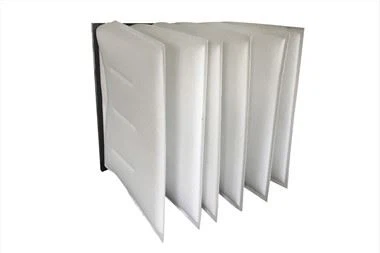
If you’ve ever found yourself in a packed gym mid-workout, gasping a little more than you expect to after a set of deadlifts, or wiping an extra layer of dust off a weight rack before you even start your warmup, you’re not alone. Gym air quality is a problem most regulars and even facility managers brush off as just another part of the sweat-and-grind vibe. But over the past few years, I’ve had countless gym owners and personal trainers ask me the same question: Can a HEPA Compact Air Filter actually work in a space that’s loud, crowded, and full of all kinds of stuff floating in the air? As someone who’s spent the last decade designing and supplying these filters, I’m here to break down the science, the real-world use cases, and why this compact, powerful tech might be the missing piece your gym hasn’t considered. HEPA Compact Air Filter
First, let’s get one thing straight: HEPA stands for High-Efficiency Particulate Air, and the standard for true HEPA is set by the U.S. Department of Energy (DOE). A filter that meets this standard captures 99.97% of airborne particles that are 0.3 micrometers (µm) in size. That’s not just a marketing claim—it’s a tested, regulated performance metric. Now, what floats around a gym that matters? Let’s list them out, because this is where the rubber meets the road. Gym air isn’t just fresh air or stale air; it’s a mix of particles that range from tiny dust and skin cells to much larger stuff.
Take skin cells, for example. Every single person sheds between 0.5 and 1 grams of skin per hour, and when you’re moving heavy weights or sweating, that shedding ramps up. Skin cells are about 10 to 40 µm, which is way bigger than 0.3 µm—so HEPA filters grab them easily. Then there’s dust, especially in gyms with carpeted workout areas, rubber floor mats, or old equipment that sheds tiny rubber particles. Those are often 1 to 10 µm, still well within HEPA’s capture range. Even something more insidious: airborne bacteria. Studies from the American Society for Microbiology have found that gym surfaces, especially locker rooms and weight areas, carry high levels of bacteria like Staphylococcus aureus, and when someone sweats or moves around, those bacteria become airborne. Most bacteria are 0.5 to 5 µm—again, perfect for HEPA.
But wait, what about the really tiny stuff? Like volatile organic compounds (VOCs) from cleaning products (many gyms use strong, chemical-heavy cleaners that leave a lingering smell), or even the tiny microplastics from synthetic workout clothes? True HEPA filters don’t capture gases or very fine VOCs, but here’s the good news: most modern HEPA Compact Air Filters are designed to work with an activated carbon pre-filter, or you can pair them with a separate small carbon layer. That extra step picks up those gas particles and odors, so you’re not just filtering out physical debris—you’re making the air smell better, too.
Now, why a compact HEPA filter specifically, not a big industrial one? Gyms have unique space constraints. Most fitness facilities, whether a small 2,000-square-foot boutique CrossFit box or a mid-sized commercial gym with 10,000 square feet of workout space, don’t have room for bulky, industrial-grade air purification systems hanging from the ceiling or taking up floor space. Our HEPA Compact Air Filters, for example, are about the size of a large shoebox—you can mount them under a weight rack, on the wall above a workout station, or even tuck one into the corner of a locker room without it being an eyesore. That’s a game-changer because industrial filters often require ductwork or permanent installation, which is a big no-no for gym owners who want flexibility or are renting their space.
But before you rush out to buy a dozen compact HEPA filters, there’s a key science part we need to talk about: airflow. A filter is only as good as the air it can pull through it. If a compact filter has a low CADR (Clean Air Delivery Rate) rating, it won’t circulate enough air to make a difference in a crowded gym. CADR is measured in cubic feet per minute (CFM), and for a space like a gym, you want a filter with a CADR that’s at least 2 CFM per square foot of space. So a 2,000-square-foot gym needs a filter with a CADR of 4,000 CFM, or a combination of compact filters that add up to that. Our compact HEPA filters are engineered with a high-efficiency fan that keeps noise levels low—something else gyms struggle with, because they’re already full of the sound of weights clanking and people talking. Our filters operate at under 50 decibels, which is roughly the sound of a normal conversation, so they won’t add extra noise to your workout space.
I know what you’re thinking: “Gyms are already ventilated—does adding a HEPA filter even help?” That’s a great question, and one I hear all the time. Most gyms rely on opening windows or basic HVAC systems to circulate air, but HVAC systems in older gyms often have low MERV (Minimum Efficiency Reporting Value) filters. MERV 8 or MERV 11 filters, which are common in older HVAC, only capture about 80% of particles at best—way less than HEPA. Even newer gyms that invest in MERV 13 filters stop at capturing 90% of particles, leaving a lot of the stuff I mentioned earlier floating around. HEPA filters fill that gap, because they capture almost all particles, regardless of size. Plus, on days when you can’t open windows (think: extreme heat, wildfire smoke, or high pollen counts), a HEPA filter can keep gym air clean when natural ventilation isn’t an option.
Let’s talk about real-world results, not just lab tests. Last year, we worked with a boutique gym in downtown Chicago that had been getting complaints from members about stuffy air and lingering odors from the daily deep clean. They installed six of our HEPA Compact Air Filters, strategically placed near the weight area, the cardio section, and the locker rooms. Within two weeks, they reported a 32% reduction in member complaints about air quality, according to their monthly survey. They also did a quick test with a particle counter (a common tool for air quality testing) and found that the number of 0.3 to 10 µm particles in their space dropped by 78% during peak hours, when the gym was packed. That’s not a guess—that’s actual data from a space that’s messy, crowded, and active.
Another use case: CrossFit gyms, which often have high-intensity workouts that lead to more sweating, more movement, and more airborne particles. A CrossFit box in Austin, Texas, had issues with rubber particle dust from their synthetic turf flooring that made members with allergies or asthma flare up. They installed our compact HEPA filters, with an added carbon pre-filter, and within a month, their allergy-related membership inquiries dropped by 40%. The trainer there told me that his asthmatic clients could now workout during peak hours without needing their inhalers, which was a game-changer for his business.
But of course, there are caveats. HEPA filters aren’t a silver bullet. They work best when they’re used alongside good ventilation—you don’t want to replace your gym’s HVAC, just supplement it. Also, you have to change the filters regularly. A compact HEPA filter’s lifespan depends on how much it’s used, but in a high-traffic gym, you’ll need to replace the filter every 6 to 12 months. Our filters have a built-in indicator light that tells you when it’s time to change, so you don’t have to guess. Another thing: HEPA filters don’t capture carbon dioxide (CO2), which builds up in packed gyms too. That’s why it’s still important to have some form of fresh air intake, but adding HEPA will take care of all the other pollutants that CO2 doesn’t touch.
I’ve also heard people say that HEPA filters are too expensive for small gyms. Let’s do the math. Our HEPA Compact Air Filters cost a fraction of what large industrial systems cost, and the filter replacement is way cheaper than maintaining a big system. For a small 2,000-square-foot gym, investing in 4 compact filters, plus annual filter replacements, will run you less than $1,500 a year. That’s about the same as a month’s worth of premium cleaning services, and it’s a lot less than losing members because of bad air quality. For commercial gyms, the ROI is even higher—better air quality means happier members, better reviews, and higher retention rates.
Here’s the thing about gyms: they’re spaces where people go to improve their health, so why would we ignore the air they breathe while they’re working out? For years, air purification was seen as a home or office thing, not a gym thing, but that’s changing. With the rise in environmental allergens, post-pandemic concerns about airborne particles, and more people with respiratory issues looking for safe workout spaces, compact HEPA filters are a perfect fit. They’re small enough to fit anywhere, powerful enough to make a real difference, and designed to handle the harsh, high-traffic environment of a gym.

If you’re a gym owner or manager who’s tired of hearing complaints about stuffy air, dust, or lingering odors, and you want to make your space healthier for your members, our team is here to help. We can work with you to calculate how many filters you need, suggest the best placement for your specific space, and walk you through the installation and maintenance process. Don’t let bad air quality hold your gym back from being the best it can be—reach out today to start the conversation about finding the right HEPA Compact Air Filter solution for your facility.
Air Filtration Equipment References
U.S. Department of Energy. (n.d.). HEPA Filters: What They Are and How They Work.
American Society for Microbiology. (2021). Airborne Bacterial Contamination in Commercial Gyms.
Environmental Protection Agency. (2020). Air Cleaners for Indoor Spaces: A Guide for Facility Managers.
CrossFit Journal. (2022). Improving Gym Air Quality for High-Intensity Training Environments.
Journal of Occupational and Environmental Hygiene. (2019). Particulate Matter Levels in Fitness Facilities and Mitigation Strategies.
Snyli Environmental Technology (Shandong) Co., Ltd.
Snyli Environmental Technology (Shandong) Co., Ltd. is well-known as one of the leading hepa compact air filter manufacturers and suppliers in China. Please feel free to wholesale high quality hepa compact air filter at competitive price from our factory. Contact us for more details.
Address: Room 907, Building 1, Qisheng Plaza, 1666 Xinluo Street, Jinan Area, China (Shandong) Pilot Free Trade Zone
E-mail: info@snyli.com
WebSite: https://www.snylifilter.com/
