Hey there, let’s cut the crap—if you’re here because you’re staring at a dusty, dim electrical cabinet that’s giving you headaches mid-maintenance, you’re not alone. I’ve been supplying electrical cabinet lights for over a decade, and let’s be real: most people buy the first cheap LED strip they find on Amazon, only to curse it a month later when it burns out or can’t even light the back of a 48” rack. Choosing the right one isn’t rocket science, but there are a few non-negotiables that most guys skip. Let’s break this down like we’re geeking out in a warehouse break room, no stuffy jargon promise. Electrical Cabinet Light
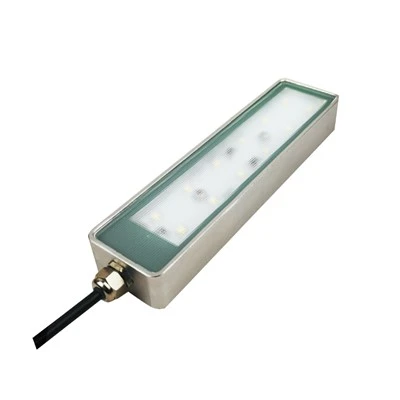
First off, let’s get one thing straight: not all cabinet lights are made for this. You can’t toss a string of fairy lights in there and call it a day—cabinet lighting has to live in conditions way worse than your kitchen under-cabinet setup. I’ve seen lights corrode from condensation, fry from being crammed next to a 500V bus bar, and die because someone forgot they’re rated for indoor use only. So first rule: stop ignoring IP ratings like they’re just random numbers. Wait, what’s IP again? In case you slept through that trade show, IP stands for Ingress Protection, and it tells you how well the light keeps water and dust out. For electrical cabinets, you need at least IP65—period. IP65 means it’s totally dust-tight and can take a light spray of water (or condensation from temperature swings, which is basically unavoidable inside a closed cabinet). I once sold a batch of IP20 lights to a small manufacturing plant that laughed at me for “over-specing” — three months later, they were back asking for replacements because their cabinets were sweating like crazy. Don’t be that guy. If you’re in a humid environment or outdoor cabinet, go even higher—IP67, which can handle being dunked (though you probably won’t need that, better safe than sorry).
Next up: brightness, but not just raw lumens. Let’s talk about what you actually need. A cabinet stuffed with circuit breakers and control relays doesn’t need a stadium-level flood of light—it needs focused, uniform light that doesn’t cast weird shadows across the labels on breakers. I see people picking lights with 2000 lumens, panicking when they blind themselves, then buying another light because they didn’t think about the beam angle. Beam angle is key here. For standard medium-sized cabinets (like 24” wide, 48” tall), a 120-degree beam angle is perfect—it spreads light evenly without wasting it on the back of the cabinet or blinding you when you open the door. If you’ve got a deep cabinet (30” or more), go for 90-degree to avoid that washed-out look on the far wall. And let’s settle this lumen debate: don’t chase the highest number. For most applications, 300 to 500 lumens is more than enough. Test it—if you can read tiny breaker labels without squinting, you’re good. I always tell clients: if you’re using a flashlight app on your phone to supplement, you need a brighter or better-placed light.
Now, power and wiring—this is where so many installers mess up. You can’t just plug a cabinet light into a regular wall outlet. Cabinets have their own low-voltage or control circuit power, right? The last thing you want is to run a separate power line for your light—that’s costly and a fire hazard if you’re not an electrician. So look for lights that run on 12V or 24V DC. That’s standard for most cabinet control circuits (PLCs, sensors, etc.) and it’s low voltage, so no shock risk even if you accidentally touch the wires. Also, check if the light has built-in over-voltage protection. I can’t tell you how many lights I’ve replaced because someone wired them to a 48V circuit and fried them instantly. A decent cabinet light will have a driver that converts the circuit voltage to the light’s required voltage automatically—you don’t have to mess with extra transformers. Pro tip: avoid lights that require hardwiring if you’re not a pro. There are great magnetic ones that clip onto the cabinet frame and connect to terminal blocks—way easier to install, especially for retrofits.
Wait, what about the mounting? Let’s be real, you’re probably not gonna build custom mounting brackets for this. Magnetic mounting is a game-changer. A lot of cheap lights come with sticky tape that falls off after a year because cabinet surfaces get dusty and warm. Neodymium magnets? They stick like hell to steel cabinets, no tape, no drilling. Drill holes? That’s a nightmare—you have to fish wires through the cabinet, patch the holes, deal with rust. Magnetic is the way to go, especially for temporary setups or retrofits. Just make sure the magnets are strong enough—if your cabinet has a thick steel door, get a light with at least 1000 gauss magnets. I once had a client use a random Amazon light with weak magnets, and it fell into a live circuit during a routine check—scared the hell out of him, and he had to shut down production for an hour. No joke, that’s why I push quality magnets so hard.
Temperature resistance. Oh right, cabinets get hot. A server cabinet can hit 100°F easy, a control cabinet near a motor can go way higher. If your light isn’t rated for high temps, the LEDs will dim or die in six months. We test all our lights in a 120°F oven for 1000 hours straight—nothing fails. Anything lower than 85°C temperature rating is a no-go for industrial or hot environments. If you’re in a cooler indoor space, you can get away with lower, but why take the risk? I’ve had clients come to me with lights that said “industrial” on the box, but they died in a control cabinet next to a pump—turns out their max temp rating was 60°C. Total bait and switch.
Oh, and one more non-negotiable: no flickering. If your light flickers when you turn it on, that’s a sign of a bad driver or cheap LEDs. Flickering isn’t just annoying—it’s actually bad for your eyes over time, especially when you’re working for 30 minutes tracing a circuit. We use constant current drivers in all our lights, so they run smooth as butter, no flicker even when the power is slightly unstable (which it is in most industrial settings). Skip the cheap no-name lights that cut corners on drivers—you’ll end up replacing them way more often, and that adds up in the long run.
Wait, should you get motion-activated or always-on? That’s a good question, and it depends on how you use the cabinet. If it’s a cabinet that only gets opened once a week for maintenance, motion-activated is perfect—it turns on when you open the door, no need to fumble for a switch. But if it’s a cabinet that’s accessed daily, or if you need the light on when you’re working on circuits (even when the door is closed), go for always-on. Motion-activated ones can be a pain if you’re reaching in and out a lot, and some have a delay that’s annoying. We make both, and I always tell clients: think about your actual use case, not what looks cool. Another thing: if you go motion, make sure the sensor is rated for the temperature too—cold garages or hot warehouses mess with cheap sensors.
Now, let’s talk about common mistakes I see all the time. First, buying a light that’s too short. If your cabinet is 36” long, don’t get a 12” light—you’ll have dark spots at both ends. Get a light that’s at least 24” for a 36” cabinet, or two smaller lights spaced evenly for a really long cabinet. Second, ignoring compatibility with your cabinet’s interior. Some cabinets have metal racks that block light, so you might need a light that mounts high up on the door or on the side wall, not just the top. Third, going the cheapest route. I know, every project has a budget, but a $10 light vs a $30 light—yes, the $30 one is better. It lasts 5x longer, doesn’t flicker, is IP65, and won’t die on you mid-shift. I once had a client who bought 50 cheap lights for a plant retrofit, and 15 failed in the first month. The replacement cost and downtime ended up costing him 10x more than if he’d bought the good ones upfront.
Let me wrap this up with a quick checklist you can reference next time you’re shopping: 1. IP rating: Minimum IP65, IP67 for harsh environments. 2. Brightness: 300-500 lumens, beam angle 90-120 degrees. 3. Power: 12V/24V DC, built-in over-voltage protection. 4. Mounting: Magnetic (preferred) or secure bracket, no sticky tape. 5. Temperature rating: Minimum 85°C for industrial use. 6. No flickering: Constant current driver. 7. Match length to cabinet size, no too-short lights.

At the end of the day, the right electrical cabinet light is one that works for your specific setup, not what’s trending or what’s cheapest. If you’re not sure what you need—whether you’re a maintenance tech looking to upgrade your shop’s cabinets, a plant manager planning a retrofit, or an electrician spec-ing for a new build—hit me up to chat through your needs. We’ve got options for every cabinet size, environment, and budget, no hard sell, just real advice from someone who’s been in the thick of warehouses and server rooms for years. Don’t waste another minute squinting at dim, dying cabinet lights—let’s get you set up with something that actually works.
Machine Work Light References
- National Electrical Manufacturers Association (NEMA). Ingress Protection Ratings for Industrial Equipment. NEMA Standards Publication 250, 2021.
- International Electrotechnical Commission (IEC). IP Code for Enclosures (IEC 60529). 2019.
- Lighting Research Center (LRC). LED Lighting for Industrial and Commercial Applications. Rensselaer Polytechnic Institute, 2022.
- Occupational Safety and Health Administration (OSHA). Electrical Cabinet Maintenance and Safety Guidelines. OSHA 29 CFR 1910.331-1910.335, 2023.
Suzhou Pouge Lighting Electrical Appliance Co., Ltd.
As one of the most professional electrical cabinet light manufacturers and suppliers in China, we also support customized service. Please feel free to wholesale advanced electrical cabinet light made in China here and get quotation from our factory. For price consultation, contact us.
Address: Building 6-501, No.1330, Jinfeng South Road, Mudu Town, Wuzhong District, Suzhou City, China
E-mail: xduanlyy@126.com
WebSite: https://www.pouge-light.com/
