As a PP formwork supplier with over a decade of experience working with construction teams across three continents, I’ve lost count of how many times I’ve been asked: “Is PP formwork all the same?” It’s a fair question—at first glance, every brand’s product looks like a smooth, white plastic sheet with cut edges. But over the years, I’ve seen first-hand that the performance differences between PP formwork brands can make or break a project’s timeline, budget, and final concrete finish. This isn’t just about a slightly different thickness; it’s about how a sheet stands up to 150°F wet concrete, how easily it releases from a wall, and how many times it can be reused before it cracks or warps. PP Formwork
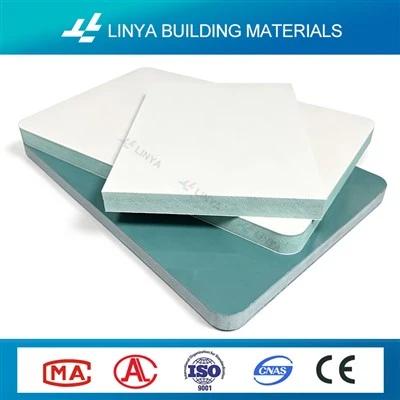
Let’s start with the basics: PP (polypropylene) formwork works by providing a reusable, smooth surface that wet concrete doesn’t stick to, so you don’t need to grease it every time. Not all PP is created equal, though. The biggest divide I see in the market is between brands that use virgin PP resin and those that mix in recycled PP. A few years back, I tried a budget brand that advertised its 8mm PP sheets as “heavy-duty.” My construction team put them to work on a 12-story residential tower in Southeast Asia, where high humidity and hot concrete were the norm. After just 25 uses, the sheets started to delaminate—their top release layer peeled away from the core, leaving tiny bits of plastic stuck to every wall we formed. We had to stop work and source replacement sheets, which cost us 3 days of labor and hundreds of dollars in wasted concrete finishes. That’s the risk of cutting corners on resin: recycled PP often has impurities that break down faster under heat, making the sheet less durable. Virgin PP, by contrast, has a consistent molecular structure that resists thermal expansion, so it can handle 50+ uses without losing its shape. It’s not just reuse count, either: virgin PP formwork also releases concrete cleaner, so you don’t have to spend hours sanding or patching small blemishes before applying a finish paint or tile.
Next, let’s talk about structural performance, which ties directly to the core formulation of the PP. Some brands add low-grade fillers to cut costs—think talc or calcium carbonate in quantities that make the sheet stiffer but brittle. I learned this lesson on a small commercial patio project a few years ago. We used a local brand’s 9mm sheets for vertical wall formwork. When we poured the concrete, the pressure from the wet mix caused the sheets to bow outward at the edges. We had to install extra wooden braces every 2 feet to keep the formwork straight, which added 20% to our setup time and material costs. Later, when I tested those sheets side-by-side with a premium virgin PP brand, the premium sheets had a slight flex under the same pressure but returned to their original shape once the concrete cured, so no extra bracing was needed. That’s the difference: premium brands engineer their PP sheets with a balance of stiffness and flexibility, often adding small amounts of co-polymer to the resin to boost impact resistance. Budget brands, meanwhile, load up on fillers, making the sheets cheap upfront but unreliable on site.
Another key performance metric for PP formwork is surface smoothness, which directly impacts the final finish of the concrete. A client once asked us to provide formwork for a high-end hotel lobby, where the walls needed a seamless, uniform texture to showcase marble veneer later. We supplied our standard virgin PP sheets, and they produced walls that needed only light pressure washing to be ready for veneer. A competing brand that a contractor tried instead had a slightly rough, matte surface, which left tiny pits in the concrete. The contractor had to spend two full days patching and smoothing each wall, adding thousands of dollars to the project. Why the difference? It comes down to the extrusion process. Top brands use a calibrated cast extrusion method that produces a uniform 0.5mm release layer on both sides of the sheet. Budget brands often use calender extrusion, which creates a thinner, inconsistent release layer—sometimes as little as 0.2mm. That thin layer wears off after a few uses, and the concrete starts to stick, leaving a rough surface. For projects where aesthetics matter, this gap is non-negotiable.
Heat resistance is another area where brands differ dramatically, especially in regions with high ambient temperatures. I’ve worked with projects in the Middle East, where daytime temperatures can hit 110°F, and wet concrete can reach 160°F inside forms. A brand popular in the Gulf region a few years ago advertised its PP sheets as “heat-resistant,” but after 10 uses, they started to warp—curving so much that we had to shim every edge to keep the formwork plumb. That’s because that brand used a PP resin with a low melting point, around 320°F, while our premium sheets use a modified PP resin with a melting point of 350°F, which can handle the heat of concrete pour without warping. Warped formwork doesn’t just look bad; it can also cause structural issues if the concrete is off-level, leading to costly reworks later.
Reusability is where the gap between brands really adds up over time. Let’s do the math: a premium virgin PP formwork sheet might cost $25 upfront and last 60 uses, so that’s about $0.42 per use. A budget recycled PP sheet might cost $15, but last only 20 uses before delaminating or warping, so that’s $0.75 per use. Suddenly, the “cheap” option isn’t cheap at all when you factor in labor, downtime, and replacement costs. I’ve seen clients switch from budget brands to our product after a single project, because even though the initial cost is higher, the savings from not having to replace sheets constantly add up. For large-scale projects, that difference can run into tens of thousands of dollars.
That’s not to say every budget brand is bad—there are niche markets where recycled PP works, like small residential projects where formwork is only used 5 or 10 times. But for most construction jobs, especially commercial or high-rise projects, the performance gaps are too big to ignore. I’ve had clients come to us after a bad experience with a budget brand, complaining that their walls had blemishes, they had to add extra bracing, and they spent more on replacements than they would have on quality formwork in the first place.
At our company, we test every batch of PP formwork before it leaves our warehouse. We check thickness consistency (no more than 0.1mm variation across a sheet), heat resistance in a controlled oven, and release performance with a standard concrete mix. We also offer tailored solutions for different projects—thicker sheets for high-pressure vertical walls, lighter sheets for horizontal slabs, and even anti-slip surfaces for formwork edges where workers step. For example, on a recent project in India, we supplied 10mm PP sheets with reinforced edges, which held up through 70 uses without any edge wear, even when workers dragged heavy equipment across the sheets on site.
If you’re in the market for PP formwork, don’t just look at the price tag. Ask suppliers about their resin type: is it virgin PP, or a mix of recycled? Ask about extrusion processes, and test small batches on a pilot project before committing to a large order. If you’re tired of dealing with warped sheets, rough concrete finishes, and constant replacements, let’s connect. We can walk you through our product specs, share case studies from projects similar to yours, and help you find the right PP formwork for your budget and timeline.
Bamboo Formwork References
- Construction Industry Research and Information Association (CIRIA). (2019). Reusable Plastic Formwork for Concrete Structures.
- American Concrete Institute (ACI). (2021). Guide to Formwork for Concrete (ACI 347R-21).
- Polypropylene Industry Association (PIA). (2020). Performance Standards for Virgin vs. Recycled Polypropylene in Construction Applications.
- International Code Council (ICC). (2018). International Building Code, Chapter 23: Concrete Construction.
- Journal of Construction Engineering and Management. (2022). Cost-Benefit Analysis of Reusable Formwork Systems in High-Rise Construction.
Shenzhen Linya Building Materials Co., Ltd.
We are one of the most professional pp formwork manufacturers and suppliers in China, also support customized service. Welcome to buy bulk high quality pp formwork in stock here from our factory. If you have any enquiry about free sample, please feel free to email us.
Address: Bantian International Center, No.5 Huancheng South Road, Ma’antang Community, Bantian Street, Longgang District, Shenzhen
E-mail: linya@formworksteelprop.com
WebSite: https://www.linyabuildingmaterials.com/
