If you’ve ever stood in the lightbulb aisle of a home improvement store, staring at rows of bulbs labeled with cryptic codes like E27 and E14, you’re not alone. For years, I heard from customers—both DIY renovators and small business owners in need of reliable lighting—who’d mix these two up, leading to trips back to the store or even ruined fixtures. As someone who’s run an E27 bulb supplier business for nearly a decade, I’ve come to see that E27 and E14 aren’t just random numbers; they’re the backbone of residential and commercial lighting, and understanding their differences can save you time, money, and frustration. E27 Bulb
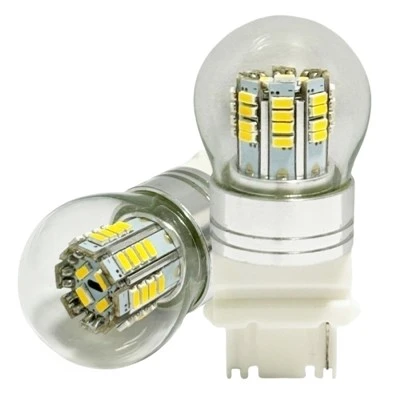
First, let’s start with the basics: the “E” in E27 and E14 stands for Edison screw, the standardized bulb base that Thomas Edison patented over 130 years ago. Unlike bayonet bases, which lock into place, Edison screw bases twist in, making them easy to install and replace. The numbers that follow the “E” refer to the diameter of the base in millimeters. That’s the key, and it’s where the first big difference hits home: E27 has a 27-millimeter base, while E14 is only 14 millimeters.
Size might seem like a trivial detail, but it dictates nearly everything about where each bulb is used. Let’s break down the practical applications. E27, with its wider base and thicker glass envelope, is built to handle higher wattages and larger amounts of light. You’ll find these in most standard residential fixtures: overhead pendant lights in living rooms or dining areas, floor lamps that light up entire corners of a room, track lighting in hallways, and even small commercial spaces like café counters or boutique storefronts. Back when we first started supplying E27 bulbs, a café owner came to us because he’d installed E14 bulbs in his main dining pendant—they were too dim to illuminate his tables, and the small bases couldn’t support the heat of a 60-watt bulb he needed. Swapping to E27 fixed that instantly; it’s a small change that made his whole space feel welcoming to guests.
E14, on the other hand, is designed for tight, low-wattage spots. Its tiny base fits perfectly in small table lamps, wall sconces, under-cabinet kitchen lights, nightstand lamps, and decorative fixtures like chandelier bulbs that need to blend in, not stand out. I’ve had homeowners tell me they only learned about E14 when they tried to replace a bulb in their bathroom vanity light and pulled out a tiny, delicate base that wouldn’t fit the E27 socket in their old light. That’s a common mix-up, and it’s why we always tell new customers to check their existing bulb’s base before ordering: if you’re not sure, measure the socket, or pull out an old bulb and check its base number.
Next, let’s talk about compatibility. This is where a lot of people run into trouble, and as an E27 bulb supplier, we field this question at least three times a week: “Can I put an E14 bulb into an E27 socket?” Or vice versa. The short answer is no, not without a dangerous adapter—and we never recommend that. The E27 socket is sized for a 27mm base; an E14 is too small, so the bulb might wobble, create a loose electrical connection, or even slip out, which is a fire hazard. Conversely, an E27 bulb is too big for an E14 socket—you can’t twist it in, and forcing it can crack the base, damage the fixture, or cause a short circuit.
Adapters seem like a quick fix, but they’re not designed for high-demand fixtures, and many don’t meet safety standards. I once had a customer who tried to use a plastic adapter to put an E27 bulb in his bedroom wall sconce, which was rated only for low-wattage E14 bulbs. The adapter melted after a few days, and the bulb’s heat warped the sconce’s casing. That could have been a serious fire, so we always advise customers to use the right base for their fixture. It’s worth noting that sockets are rated for specific wattages too—an E27 socket might handle up to 100 watts, while an E14 is usually limited to 40 or 60 watts, depending on the fixture. That’s why using a mismatched bulb isn’t just about fit; it’s about electrical safety.
Another difference is durability and cost, which are tied to their design. E27 bulbs are built to be more robust. Their thicker glass and wider base can withstand more handling, making them better for high-traffic areas where bulbs get knocked around, like retail displays or rental properties. They also tend to have longer lifespans, especially LED E27 bulbs, which last 15,000 to 25,000 hours compared to E14 LED bulbs, which usually last 10,000 to 15,000 hours. That’s not a rule, though—quality matters more than the base size. A cheap E14 bulb from a no-name brand might burn out faster than a premium E27 bulb from a reputable supplier, which is why we always emphasize sourcing from a trusted vendor instead of going for the cheapest option.
Cost-wise, E14 bulbs are often slightly cheaper upfront because they’re smaller, but they’re more limited in their uses. If you need a bulb for a large living room, an E14 just won’t provide enough light, so you’d end up buying multiple bulbs to match the brightness of one E27. That can add up over time. For example, if a 60-watt E27 costs $3 and delivers 800 lumens, you might need two 40-watt E14 bulbs (each $2) to get the same 800 lumens, spending $4 total. Over a year, that difference adds up, which is why choosing the right base for the job is a smart financial call.
I’ve also noticed a trend in recent years: more homeowners are opting for smart bulbs, and both E27 and E14 have smart versions available. E27 smart bulbs are more common, especially in larger fixtures, because they can handle the higher power needed for Wi-Fi connectivity and app controls. We supply a line of E27 smart bulbs that work with Alexa and Google Assistant, which are popular with people who want to control their living room lights remotely. E14 smart bulbs do exist, but they’re less versatile, mostly limited to small decorative fixtures, so if you’re looking for a smart bulb for a central light, E27 is usually the better choice.
One common myth I hear from customers is that E27 is only for commercial use, and E14 is strictly residential. That’s not true. We supply E27 bulbs to both homeowners and businesses—small cafes, boutique offices, even outdoor string lights (which often use E27 for their durability). And E14 bulbs aren’t just for homes; we’ve sent E14 bulbs to small retail stores for their decorative window sconces, and to event planners for table centerpieces. It all comes down to the size and wattage the fixture is designed for.
As someone who’s worked with E27 bulbs for years, I’ve learned that the best way to avoid confusion is to double-check two things before buying: your existing bulb’s base size, and your fixture’s maximum wattage. If you pull a bulb out and see E27 printed on it, you know you need that same size. If you’re replacing a bulb and can’t read the markings, measure the socket’s inner diameter with a ruler—27mm is about an inch, 14mm is half an inch. That’s a quick, easy way to confirm, even if you don’t have the old bulb handy.
If you’re still unsure, don’t guess. That’s the mistake we see most often, and it’s why so many people end up with bulbs that don’t fit. Whether you’re a homeowner updating your kitchen fixtures, a small business owner restocking lights for your shop, or a contractor outfitting a new build, it’s worth taking a minute to get the right base. A wrong bulb isn’t just an inconvenience—it’s a safety risk, and it can waste your money on something you can’t use.
At the end of the day, E27 and E14 are both essential parts of the lighting ecosystem, each designed for a specific purpose. E27 is the workhorse for big, bright spaces, offering durability, versatility, and enough power to illuminate large areas. E14 is the delicate, compact option for tight spots where style and low brightness matter most. As an E27 bulb supplier, we don’t just sell bulbs—we help people make the right choice for their needs, whether that’s a 10-pack of standard E27 bulbs for a living room, or a box of E14 bulbs for a bedroom nightstand.
If you’re looking for reliable E27 bulbs, or have questions about which size is right for your fixtures, feel free to reach out to us to discuss your lighting needs. We’re here to help you find the perfect fit, no matter the project.
P28S Bulb References
- "Edison Screw Base Standardization," International Electrotechnical Commission, 2022.
- "Light Bulb Base Size Compatibility," National Fire Protection Association, 2021.
- "LED Bulb Lifespan and Performance Data," Department of Energy, 2023.
- "Residential and Commercial Lighting Fixture Specifications," Lighting Association of North America, 2022.
Nicebulbs
As one of the most professional e27 bulb manufacturers and suppliers in China, our products have good reputation in the market. Please feel free to wholesale cheap e27 bulb for sale here and get pricelist from our factory. Quality products and reasonable price are available.
Address: No. 86 Zhongli Road, Nancheng Street, Dongguan City, Guangdong Province
E-mail: vic@nicebulb.com
WebSite: https://www.nicebulbs.com/
