Hey everyone, it’s Jake from the high-voltage switchgear team—you know, the folks who make the gear that keeps factories, hospitals, and whole neighborhoods powered safely. If you’re reading this, chances are you’ve hit a snag with your HV switchgear lately: maybe it’s tripping randomly, making weird noises, or just not performing like it should. I’ve been doing this for 12 years, seen every fault in the book, and today I’m breaking down how to troubleshoot these issues—no stuffy jargon, just practical stuff we actually use on the job. High-Voltage Switchgear
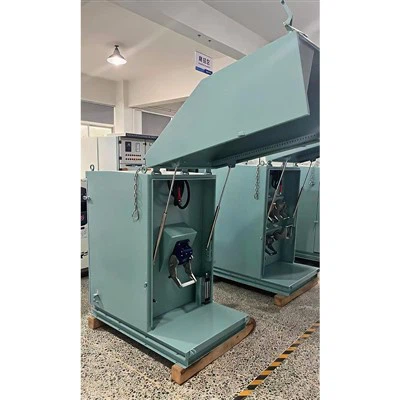
First, let’s get one thing straight: HV switchgear isn’t like your home’s circuit breaker. This stuff handles 1kV and up, so messing around without the right training or gear is a no-go. I always tell our clients—whether you’re a plant manager or an electrician—that safety is step zero, period. Don’t skip that. Now, onto the actual troubleshooting process. We break this down into three core steps: pre-checks before you even touch the gear, systematic fault diagnosis, and fixing the issue (or knowing when to call us).
Step 1: Start with the Easy Stuff—No Disassembly Required
A lot of faults look super complicated, but they’re just loose connections or dirty sensors. I once had a client who thought their 13.8kV switchgear was dying because it kept tripping, only to find a squirrel had chewed through a wire terminal in the control panel. Yup, that’s a real one. So before you grab your wrench or test meter, do a walkaround.
First, check the basics: power supply inputs. Is the line voltage stable? We’ve seen so many issues caused by grid fluctuations—even a 5% dip can mess with the switchgear’s internal relays, making them trip unnecessarily. Next, inspect the external condition: are there any cracked insulators? Those little ceramic or polymer pieces that keep current from arcing to the wrong spot. Even a tiny crack from weather or debris can cause a partial discharge, which over time will turn into a full fault. Also, check for any signs of overheating—discolored paint around terminals, melted plastic, or weird smells (burned rubber is a dead giveaway).
Another quick win: the control circuit. Most modern switchgear relies on small 24V DC circuits for relays and sensors, and if those are messed up, the whole unit acts out. Check the battery backup (if your gear has one)—dead batteries are a super common issue. If the battery is more than 5 years old, it’s probably the culprit. We had a client replace their battery for $150 and solve a fault they were ready to pay $10k to fix. Don’t sleep on that.
Step 2: Systematic Diagnosis—Break It Down
Once you’ve ruled out the easy stuff, it’s time to dive a little deeper. But don’t panic—this is just about isolating parts to find where the fault is. First, get your hands on the switchgear’s operation manual. I know, I know, manuals are boring, but they have specific specs for your model—current ratings, fault thresholds, sensor locations. Every brand’s gear is a little different, so generic advice won’t cut it here.
First, identify the type of fault. The most common ones we deal with are:
- Unintentional tripping: The switchgear opens when it shouldn’t. This is usually a relay issue or a ground fault.
- No operation: The switch won’t close or open when commanded. This is almost always a control circuit or actuator problem.
- Abnormal noise: Banging, buzzing, or humming that’s not normal. That’s usually arcing or loose parts.
- Overheating: As I mentioned earlier, a big red flag that something’s drawing too much current or connections are bad.
Let’s take tripping first. If it’s tripping on overcurrent, use your current meter to check the actual load on each phase. Maybe your plant just added a new big machine, and the switchgear’s rating is too low for the new load— that’s a sizing issue, not a fault in the gear itself. If it’s tripping on ground fault, you need to do an insulation resistance test (IR test) on each phase. A reading below 1 megohm per kV is a sign of leakage—either a bad insulator or moisture in the enclosure. We once had a client’s outdoor switchgear that took on water after a heavy rain, and the IR test dropped to 0.2 megohms—drained the enclosure, let it dry, and it worked again.
For abnormal noise: If it’s a high-pitched buzzing, that’s partial discharge (PD). PD is when electricity jumps through small gaps in insulation, and it’s a sign that your insulation is degrading. You can use a PD detector (we rent these out to clients who don’t have their own) to find where it’s coming from—usually a cracked insulator, loose busbar, or degraded cable. If it’s a low thumping, that’s probably a loose mechanism in the breaker or disconnect switch. You can do a visual check of the operating linkage—just make sure the switch is locked out before you get close.
Step 3: Know When to Fix It Yourself (and When to Call the Pros)
Now, not every fault is something you can fix. Let’s be real—HV switchgear is expensive, and the wrong repair can turn a small issue into a total replacement. So here’s how to tell:
If the fault is something simple—loose terminal, dead battery, dirty sensor—go for it. We recommend doing annual visual inspections and cleaning your insulators once a year with a soft brush and isopropyl alcohol (no harsh chemicals) to prevent dirt buildup. That’ll save you so many headaches.
But if you’re dealing with:
- Arcing inside the enclosure (you’ll see smoke or a bright flash, or smell burned metal)
- Low insulation resistance that won’t go away after drying
- A failed breaker mechanism or internal busbar damage
- PD that’s coming from a component you can’t replace yourself (like a cast resin transformer inside the switchgear)
That’s when you call someone who knows HV switchgear inside and out. And that’s where we come in—we’re not just a supplier, we’re the team that installs, maintains, and troubleshoots this gear every single day. We’ve worked on all makes and models, so even if your gear isn’t ours, we can get it back up and running fast.
Wait, one more thing—preventive maintenance is way easier than troubleshooting. I can’t stress that enough. We offer custom PM plans where we come out every 6 or 12 months to do thermographic scans (checking for hidden overheating), IR tests, and lubricate moving parts. Most of our clients that stick with our PM plans go 5+ years without a major fault, whereas clients who skip PM usually have a big issue every 1-2 years, which is way more expensive.
If you’re dealing with a tricky fault right now and don’t want to risk making it worse, hit us up. Whether you need a quick diagnostic call, on-site service, or even a quote for replacement parts if it’s time to upgrade, we’re here to help. We get that downtime costs you money, so we move fast and get the job done right the first time.
Now, let’s wrap this up with a quick recap to make sure you don’t miss anything:
- Safety first—lock out the gear before any hands-on work, always.
- Start with the basics: power supply, batteries, external condition.
- Isolate the fault type (tripping, no operation, noise, overheating) to narrow it down.
- Fix simple stuff yourself, but call the pros for internal or high-risk issues.
- Don’t skip preventive maintenance—it’s the best troubleshooting tool there is.
High-Voltage Switchgear I’ve been in this game long enough to know that a lot of people see HV switchgear as a black box, but it’s just a bunch of parts that wear out or break, same as anything else. You just need to know where to look. If you need help with a specific fault, or want to chat about upgrading your system to prevent future issues, reach out—we’re ready to help.
References
- Electrical Safety Foundation International. (2022). High-Voltage Switchgear Safety Guidelines.
- Institute of Electrical and Electronics Engineers. (2021). Standard for Switchgear Maintenance and Testing.
- International Electrotechnical Commission. (2020). HV Switchgear Fault Diagnosis Best Practices.
Yuanzhuo Electrical Equipment (Jiangsu) Co., Ltd.
We’re well-known as one of the leading high-voltage switchgear manufacturers and suppliers in China. We warmly welcome you to wholesale high quality high-voltage switchgear at competitive price from our factory. If you have any enquiry about cooperation, please feel free to email us.
Address: Group 8, Chengdong Village, Fucheng Sub-district Office, Funing County
E-mail: markcheng1358@126.com
WebSite: https://www.yzdlchina.com/
