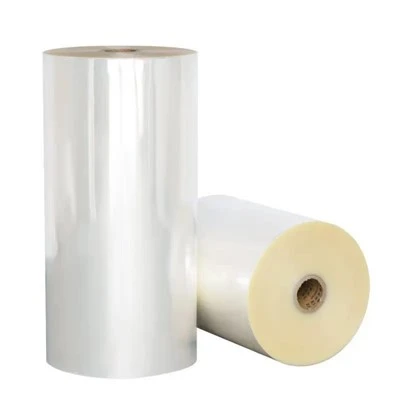
If you’ve ever reached for a crisp bag of potato chips that glides smoothly open, a shipping envelope that slides easily along a warehouse conveyor, or a label that peels without sticking before it’s supposed to, you’ve interacted with cast polypropylene (CPP) film. As a supplier of custom CPP films for over 12 years, the question I get asked most by packaging engineers, converting teams, and brand owners isn’t just “What is CPP film?”—it’s “What’s the coefficient of friction (COF) of cast polypropylene film, and why does it matter for my application?” Cast Polypropylene Film
I get it. COF is one of those underrated specs that either makes or breaks a production line. Too high, and your rolls of film jam as they’re fed into bag-making machines, or labels stick together so bad half a roll goes to waste during die cutting. Too low, and a stack of pre-made bags slides dangerously on a warehouse shelf, or a printed liner shifts during shipping and ruins a run of graphics. Over the years, I’ve walked a hundred customers through tuning COF to their exact needs, and it’s never a one-size-fits-all number. Let’s break this down like I would in a conference room with a client: no jargon overload, just the real-world science and practical know-how I’ve built into every CPP film we ship.
First, let’s define what COF actually is, because it’s easy to mix up the two types: static vs. kinetic. Static COF is the force needed to get two stationary surfaces sliding against each other. Kinetic COF is the force needed to keep them sliding at a constant speed. For almost every CPP film use case, kinetic COF is the number we care about—because once film is moving through a machine or along a line, we need consistent, predictable sliding. Static COF matters too, though: if your stacks of film or bags are stationary on a pallet, you don’t want them sliding mid-transit, but if they’re meant to feed through automated equipment, you don’t want that initial “stick” that jams a machine halfway through a 10,000-unit run. Got that? Now, back to CPP film specifically.
Cast polypropylene film is made by melting polypropylene resin, extruding it through a flat die, and quenching it rapidly on a chilled chrome roller. That quenching step is what gives cast film its signature clarity, stiffness, and uniform surface—unlike biaxially oriented polypropylene (BOPP) film, which is stretched after extrusion and has a totally different surface texture. The surface of raw, unmodified CPP film is naturally pretty smooth, but it’s not smooth enough for most high-speed applications without adding slip agents. Wait, slip agents? Yeah, that’s where COF tuning happens. Slip agents are additives we blend into the resin before extrusion—usually erucamide or oleamide, which are fatty acid amides that migrate to the film surface over time, creating a thin, lubricating layer that reduces friction. Some customers think slip agents are a “band-aid,” but no—they’re a precision tool.
So what’s the baseline COF for raw CPP film, no additives? Let’s get specific. Most virgin homopolymer CPP film right off the line, without any slip or anti-block agents, has a kinetic COF of around 0.4 to 0.6. That’s way too high for 90% of packaging uses. At 0.5 kinetic COF, a roll of film will drag along conveyor belts, jam in form-fill-seal machines, and make converting teams curse. But wait—some specialty grades are different. For example, matte CPP film, which has a slightly rougher surface than clear cast film, has a higher baseline COF, around 0.5 to 0.7 unmodified, because the tiny surface texture creates more contact points between sheets. That’s important to note: surface texture, not just resin type, impacts baseline COF.
Now, modified CPP film, with slip agents, is where we get the COF ranges that matter for real applications. This is where most suppliers (including us) categorize CPP film by COF tiers, because that’s how customers order it, not by a single number. Let’s walk through the most common tiers, with real examples of what they’re used for:
-
High COF CPP: Kinetic COF 0.4 to 0.6. Wait, that’s almost baseline, but with very low levels of slip, or no slip at all. Why would anyone want that? For applications where you need friction to hold things in place. Like heavy-duty shipping bags, where you don’t want a stack of bags sliding off a pallet during a forklift drop, or industrial liners that need to grip onto metal frames during installation. I once worked with a construction equipment manufacturer that needed CPP liners for their air filter housings—they didn’t want the liner shifting inside the housing, so we supplied a high COF grade at 0.55 kinetic COF, and it’s been working for them for 8 years. No jams, no shifting, exactly what they needed.
-
Medium COF CPP: Kinetic COF 0.2 to 0.35. This is the sweet spot for most packaging. Snack bags, cereal liners, candy wrappers—all use medium COF film. It’s smooth enough to feed through high-speed form-fill-seal machines (some lines run 500 bags per minute, and at 0.3 COF, there’s no drag), but not so slippery that a stack of 500 pre-made bags slides off a shelf. We source this tier most often, and we keep a stock of it in 10, 12, and 20 micron thicknesses because it’s our bestseller. Last quarter, a craft cookie bakery switched to our medium COF CPP for their stand-up pouches—their old film was too high COF, so their line would jam 1 out of every 200 pouches, costing them $1,200 a day in downtime. After switching, their jam rate dropped to less than 0.05%, and they actually increased their line speed by 10%. That’s the ROI of getting COF right, right there.
-
Low COF CPP: Kinetic COF below 0.2. This is the slipperiest grade we make, used for super high-speed applications. Think of the small candy bags you get at a movie theater, or the individual snack bars that come wrapped in clear film. These lines run 1,000 units per minute, and any friction would cause the film to tear or stall the machine. Low COF CPP can get as low as 0.12 kinetic COF, but we never go below 0.1 because at that point, the slip agent becomes so concentrated that it starts to transfer—if you’re printing on the film, the slip agent can rub off onto the print plate, causing smudges or faded graphics. I had a client a few years ago that insisted on a 0.1 COF film for their gum wrappers, and we pushed back—we tested their prototype, and at 0.08 COF, their printing team reported that 15% of the rolls had faded text. We landed at 0.15 COF, which was just slippery enough for their line, and no print issues. Win-win.
Wait, but COF isn’t static—literally. There are a dozen factors that change the COF of CPP film, even after we ship it. I can’t tell you how many times a customer will call us saying, “Your film has higher COF than the spec!” and it turns out it’s not our film—it’s how they’re storing it. Let’s talk about those factors, because they’re the part of COF that people rarely think about, and it’s the source of most headaches.
First, time: slip agents take time to migrate to the film surface. When we make a roll of CPP film, the slip agents are blended evenly throughout the resin. They don’t show up on the surface immediately. Most grades need 24 to 72 hours post-production to reach their rated COF. We always warn customers that if they test a roll fresh off the slitter, it’ll have a higher COF than spec, and to wait 3 days before doing final testing. I once had a customer that tested our film 2 hours after it was delivered, called us furious, said “your spec says 0.3, mine’s 0.45!” We asked when they tested it, and they said right after unloading the truck. We told them to wait 3 days, and sure enough, it stabilized at 0.32—exactly what we quoted. That’s a mistake everyone makes, at some point.
Second, storage conditions: temperature and humidity are huge. If you store CPP film in a hot warehouse, the slip agents migrate faster, so COF will drop over time. If you store it in a cold, dry space, slip agents move slower, so COF stays higher. I’ve had customers in Alberta, Canada, store film in an unheated garage in winter, and their COF was 0.1 higher than the spec, because it was 10 degrees outside, slowing the slip agents down. We adjusted their order to a slightly higher initial COF grade, and it worked perfectly. Humidity also plays a role—high humidity can make some slip agents clump on the surface, increasing COF, while low humidity keeps them evenly spread.
Third, surface treatment: almost all CPP film is corona-treated before converting, to make it printable or sealable. Corona treatment alters the film’s surface chemistry, and it can change COF by 0.05 to 0.1. If you treat a high slip film, the roughened surface from treatment will make COF go up slightly, while treating a low slip film might make it a little higher than expected. That’s why we always test COF after corona treatment, not before, and give customers a spec for treated film, not raw film.
Fourth, other surfaces: COF is always a measurement between two surfaces, not just one. The rated COF of CPP film is usually measured against steel, right? Because that’s what’s in conveyor belts and machine rollers. But if you’re testing CPP film against another plastic, like PET, or against printed ink, or against itself (when you’re stacking two sheets of film), the COF will be different. For example, our medium COF film is 0.3 against steel, but it’s 0.25 against printed polyethylene ink, because the ink has a slightly smoother surface. We always ask customers what they’re sliding the film against, to give them the right spec. A food packaging customer once tested their CPP film against itself, not steel, and thought their film was too slippery—turns out, they needed a COF spec for film-on-film, not film-on-steel, so we adjusted their order to a grade with 0.4 COF on itself, which solved their problem.
Now, let’s get to the practical stuff: how do we measure COF, and why do the numbers matter for your bottom line? The standard test method for COF of plastic film is ASTM D1894, and that’s exactly what we use in our in-house lab. We cut two 100x100mm samples of film, place them face-to-face (or against steel, depending on the test), attach one to a sliding carriage on a machine, pull it at 150mm per minute, and measure the force needed. We run 5 tests per sample, average them, and that’s the spec we give. No guessing, no arbitrary numbers—just ASTM-compliant testing, because that’s what customers need for their production line audits.
For our customers, the cost of getting COF wrong is real. A small bakery that has 10 jams per hour on a 10,000-bag run is looking at thousands of dollars in downtime, lost product, and overtime for their line workers. A big box retailer that gets a shipment of bags that slide off pallets during shipping might have to pay for damaged goods, or even recall products. That’s why we don’t just sell CPP film with a COF number—we work with customers to test their line, run small trials, and adjust the COF to their exact needs. Last year, we worked with a frozen food brand that had a problem: their stand-up pouches would freeze together in the warehouse, because the COF was too low. The pouches were slipping so much that when they were stacked, they’d rub together, and the moisture from the frozen food would make them stick. We adjusted their CPP film to a slightly higher COF grade (from 0.25 to 0.35) and added a tiny amount of anti-block agent, and their sticking rate dropped from 12% to less than 1%.
Wait, a quick note on anti-block agents, because people often mix them up with slip agents. Anti-block agents are tiny particles (like silica) that are added to the film to prevent two sheets from sticking together. They roughen the surface a little, so they actually increase COF. So if you have two problems: your film is slipping too much on the line, and sticking to itself when stacked, you need a balance of slip and anti-block. We have custom blends that do exactly that—for example, a grade with 0.28 kinetic COF, and 0.1% anti-block, that’s perfect for pouches that need to feed well but not stack too slippery.
Is there a “one right COF for CPP film”? No, never. That’s the biggest lesson I’ve learned in 12 years as a CPP film supplier. The “right” COF depends on your application, your production line speed, how you’re storing and shipping your product, and even the other materials you’re pairing with the CPP film. I’ve supplied film with COF as low as 0.12 for high-speed candy packaging, and as high as 0.6 for heavy industrial liners. Both are correct, both are meeting the needs of the customer.
If you’re currently working with a CPP film supplier and you’re having issues with jams, sticking, or shifting, ask them to show you their COF test data, and to explain how they tailored the COF to your specific application. A good supplier won’t just give you a number—they’ll ask you questions about your line, your storage, your end use, and adjust the film accordingly. For us, that’s non-negotiable. We keep a library of COF data for every grade we make, and for every customer’s industry, so if someone calls with a problem, we can pull up their order, test the film, and figure out the solution in minutes.
At the end of the day, cast polypropylene film is one of the most versatile packaging materials out there, and COF is just one of the specs that makes it work for your product. If you’re looking for custom CPP film with precise COF tuning, or if you’ve been having issues with film performance that starts with friction, we can help. Our in-house lab can run tests, do small trial runs, and deliver film tailored exactly to your needs. Reach out to our team to discuss your requirements, and we’ll make sure you get the right CPP film for your application.
Standard Cast Polypropylene Film References
ASTM International. Standard Test Method for Static and Kinetic Coefficients of Friction of Plastic Film and Sheeting (ASTM D1894). Annual Book of ASTM Standards, 2022.
Hansen, C.M. Adhesion and Diffusion in Packaging Films. Journal of Packaging Science and Technology, vol. 18, no. 3, 2005, pp. 145-162.
Riaz, A. Polypropylene Films: Production, Properties, and Applications. Rapra Review Reports, vol. 17, no. 4, 2006.
Qingzhou Huiyuan Packaging Materials Co., Ltd.
As one of the most professional cast polypropylene film suppliers in China since 1997, we’re featured by quality products and good service. Please feel free to buy cheap cast polypropylene film made in China here from our factory. For price consultation, contact us.
Address: Naoshan Industrial Park, Shaozhuang Town, Qingzhou City, Weifang, Shandong Province, China.
E-mail: 15864598133@163.com
WebSite: https://www.huiyuanfilms.com/
