If you’ve ever driven past a wind farm or stood at the base of a sleek, vertical tubular tower holding up a bridge signal or a small communications antenna, you might’ve wondered: how the hell do those big, hollow steel tubes get put together? Especially when we’re talking about our tubular towers—units that need to stand 80, 120, even 180 feet tall, holding up tons of equipment, and sitting in everything from coastal salt air to frigid mountain wind. I’m here to break that down like I do for every client who calls our shop, no boring jargon, just real talk about how we join those tubes right here at our facility. Tubular Tower
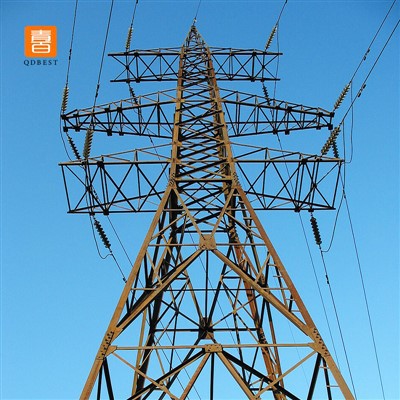
First off, let’s set the scene: a tubular tower isn’t one single straight steel pipe. It’s usually made up of 3 to 5 sections, each 20 to 40 feet long, delivered to our yard by flatbed. We size each section perfectly, grind down any rough edges, and line them up so their ends sit flush—no gaps, no wobbly fits. That alignment is everything before we even think about welding; if it’s off by even a sixteenth of an inch, the weld will be weak, and the whole tower could fail under stress. I’ve seen new guys skip that step, waste 20 hours of work, and end up re-cutting a section to fix it. Never skipped alignment.
Now, the main welding method we use most days is submerged arc welding (SAW)—we call it “sub arc” around the shop, way shorter. Here’s why it’s our go-to: it’s consistent, it melts a thick, strong weld, and it doesn’t spatter all over the place like stick welding (which we only use for small repairs these days). Sub arc works by feeding a bare steel wire through a layer of granular flux—think of it like super fine sand, but heat-resistant—onto the joint between two tube sections. An electric current runs through the wire, melting both the wire and the edges of the steel tubes, and the flux shields the weld puddle from oxygen and nitrogen in the air. If those gases get in, the weld gets porous, like a sponge, and that’s a death sentence for a tower that’s gonna hold up 50 mph winds and ice loads.
We don’t just fire up the sub arc rig and weld in a straight line, either. Tubular sections are round, so each weld is a full 360-degree circle around the tube. Our guys use a rotating positioner— a big metal frame that spins the tube slowly while the weld head stays locked in place. That keeps the weld pool level, so it doesn’t drip or leave weak spots at the top or bottom of the circle. When I’m training new welders, I make them practice spinning test tubes 10 times before they touch a production section; if the rotation’s off by just a degree, the weld gets too wide in one spot and too thin in another. Thin spots = failure.
But sub arc isn’t the only trick up our sleeve for certain jobs. Sometimes, for smaller tubular towers (like cell phone towers in suburban areas, not wind turbines that need to hold 200 ft blades), we use flux-cored arc welding (FCAW)—“filler core” weld, as we say. This is easier for field work, too, which is a big deal if a client needs us to do site joins instead of building the whole tower at our shop. FCAW uses a wire filled with flux inside it, so we don’t need the separate granular layer. It’s a little more prone to porosity if you rush it, but it’s way more portable than sub arc gear, which is huge for remote jobs where a big positioner won’t fit.
Wait, let’s talk about field joins specifically, because that’s where a lot of people mess up. If we can’t transport a single 180 ft tube section (most states have weight limits on oversize loads, anyway), we’ll send two sections to the site, and weld them there. This isn’t just “weld two pipes together”—the site has to be flat, with a level base for the tube sections so they line up right. We use laser levels for that, not just a tape measure, to make sure the gap between the two sections is no more than 1/32 of an inch. Any bigger gap and the weld has to fill too much material, which shrinks as it cools and pulls the tube out of round. That’s a big no-no for wind turbines, where even a 1/4 inch out-of-round spot can make the whole tower wobble at high speeds.
Now, after we weld a joint, we don’t just send it out the door. We do a bunch of checks—this isn’t the old days where you just grind the weld and call it good. First, a visual inspection: we run our gloved fingers over the weld, looking for cracks, undercuts (places where the weld is thinner than the tube metal), or spatter left over. We’ll also do a bend test on every 10th weld on our shop sections—bend a small sample of the welded tube 180 degrees, if it breaks at the weld instead of the steel, we know we’ve got a good joint.
For the big stuff—wind turbine tubular towers, which have to pass strict load tests—we also do non-destructive testing (NDT). That means we don’t ruin the tube to test it. We use ultrasonic testing (UT), which sends sound waves through the weld to spot tiny hidden cracks or porosity that you can’t see. We also do magnetic particle testing (MT) for smaller surface cracks, especially on critical joints. I’ve seen a UT pick up a tiny void in a weld that looked perfect to the eye—fixed that before the tube even left the yard, saved the client from a $10k repair down the line.
Wait, what about joining smaller parts to the tube? Like flanges at the base of the tower, or brackets for equipment? We usually use the same sub arc or filler core welding, but sometimes we’ll use pre-heating if the steel is thick. Thick steel cools fast after welding, and that can cause hard, brittle welds that crack under stress. So we’ll heat the area around the weld with a propane torch to 200-300 degrees Fahrenheit before welding, which slows down cooling and makes the weld tougher. For coastal jobs, where salt air causes corrosion, we also add a post-weld grind to smooth the weld and avoid crevices where water can get trapped— that’s how we make our towers last 30+ years, not 10.
A lot of people ask me why we don’t just bolt the sections together instead of welding. Bolts sound easy, right? But think about a wind turbine tower: the base has to hold up 200,000 lbs of blades and nacelle, plus constant wind force. Even the biggest high-strength bolts can loosen over time, especially with temperature changes or vibration. Welds make a single, solid connection that’s part of the tube, not an add-on. Sure, flanges for field joins use bolts to pull the sections tight before welding—those bolts are critical to getting the alignment right—but we weld over the flanges in most cases for extra strength.
Let me give you a real example of a job we did last year. A wind farm in West Virginia needed 12 tubular towers, each 160 feet tall, for new 5 MW turbines. We built each section at our shop, welded them with sub arc, did UT testing on every joint, and painted them. On site, we joined the top and base sections with flux-cored welding because the access road was too narrow for the big sub arc rig. We sent our lead welder, who’s been doing tubular tower welds for 22 years, plus a NDT tech, to check every weld before the crane lifted the tower into place. That wind farm’s been up a year now, no issues— that’s the good stuff.
I know a lot of clients come to us because they don’t want to deal with costly, time-consuming mistakes. Cutting corners on joining tubular towers isn’t just bad for business, it’s dangerous. I’ve been in this game for 15 years, and I’ve seen what a bad weld can do— it’s not a story I want to tell, and it’s why we take every step slow, from alignment to final testing.
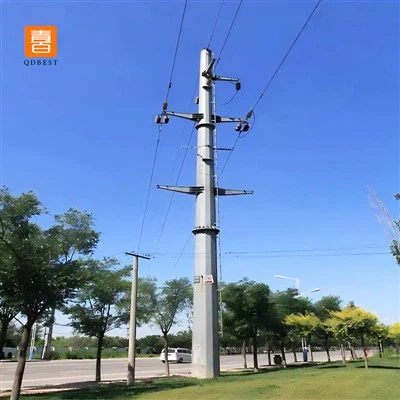
If you’re in the market for tubular towers—whether for wind, communications, or industrial use—we’ve got the experience and the gear to get the job done right. We build, weld, and test every section in-house, so you don’t have to worry about hidden issues down the line. Reach out to our team to talk through your project, get a quote, or ask any questions you have about how we put those towers together. No sales pitch, just straight answers about the work we do every day.
The Monopole Tower References
- American Welding Society (AWS). D1.1: Structural Welding Code – Steel. 2020.
- International Organization for Standardization (ISO). 14322: Welding and allied processes – Quality requirements for welding. 2019.
- WindEurope. “Tubular Steel Towers for Wind Turbines: Design and Construction Guidelines.” 2021.
- American Society of Mechanical Engineers (ASME). Boiler and Pressure Vessel Code, Section IX: Welding, Brazing, and Fusing Qualifications. 2022.
- National Association of Tower Erectors (NATE). “Best Practices for Tubular Tower Installation and Welding.” 2020.
Qingdao BEST Steel Structure Co., Ltd.
Qingdao BEST Steel Structure Co., Ltd. is one of the most professional tubular tower manufacturers and suppliers in China. We warmly welcome you to buy customized tubular tower made in China here from our factory. If you have any enquiry about OEM service, please feel free to email us.
Address: Jiaobei Industrial Park, Qingdao, China
E-mail: salesmanager@qdbsstower.com
WebSite: https://www.qdbsstower.com/
