If you’re a machinist, casting buyer, or just someone who’s worked with iron parts, you’ve probably noticed: gray iron and ductile iron don’t machine the same way. Last week, a regular customer of ours – they make heavy-duty agricultural equipment – sent back a batch of gray iron housing castings and said, “These are way easier to mill than the ductile parts I ordered from you last month.” That comment stuck with me because it’s a super common pain point, but it’s not just “some metals machine different” – there’s a scientific reason behind it, and as an iron casting machining supplier, I’ve learned to spot these differences fast to avoid wasted time and mess on the shop floor. Iron Casting Machining
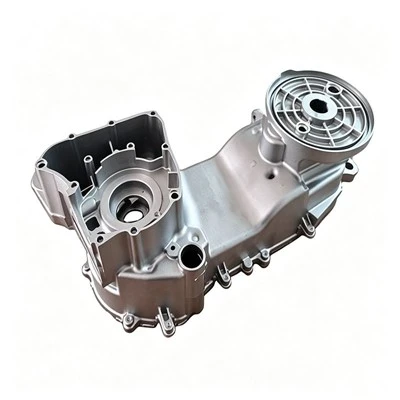
First, let’s keep it simple: both are cast irons, but their internal structures are night and day. Gray iron gets its name from those tiny, flat graphite flakes you can see if you snap a broken casting in half. It’s been around for hundreds of years, used for engine blocks, pipes, and that heavy base on your drill press. Ductile iron, sometimes called nodular or SG (spheroidal graphite) iron, was invented around the 1940s by adding a tiny bit of magnesium to the molten iron before casting – that turns the flat graphite flakes into round, ball-shaped nodules. That shape change is the whole reason ductile iron is way stronger, more flexible, and less likely to snap under load than gray iron.
But how does that shape change matter for machining? Let’s start with what happens when you machine metal: your cutting tool (the end mill, lathe bit, whatever) is digging into the material, and the material either shears off as a chip or gets pulled apart. Gray iron’s flat graphite flakes act like built-in stress relievers – they create tiny cracks all through the metal. When the tool hits gray iron, those cracks make the metal break cleanly around the cutting edge. That means smoother chips, less friction on the tool, and less heat building up. I’ve seen gray iron machine so fast, we can run a milling operation at 3,000 RPM on a ¾-inch end mill without burning the tool – that’s unheard of with ductile iron.
Ductile iron, though, has those round graphite balls. They don’t create cracks the way gray iron’s flakes do – instead, they’re just tiny, hard spheres. The metal matrix (the “glue” holding everything together) is also different: ductile iron has a stronger, more uniform matrix (usually pearlite or ferrite, depending on the grade) that resists breaking apart. So when you machine ductile iron, the tool can’t just shear it cleanly – it has to actually chip away at that tough matrix, and those little graphite balls can get dragged along, too. The result? Longer, stringy chips instead of short, dusty ones, more friction on the tool, way more heat, and a higher chance of something called “built-up edge” – that weird gunk that sticks to the cutting tip and ruins your surface finish if you don’t slow down.
Let me throw in a real shop example to make this concrete. Last quarter, we had a big order for ductile iron valve bodies and gray iron pump housings for a water treatment plant. The pump housings ran like clockwork: we milled the mounting faces in 12 minutes per part, zero tool changes, surface finish came out perfect without a second pass. The valve bodies? We had to slow the spindle down to 1,800 RPM, used a coolant specifically formulated for ductile iron, and it took 22 minutes per part. Even then, we had to sharpen the end mills twice as often as we did for the gray iron. That’s not us being slow – that’s the material telling us what it needs.
Another big difference is porosity and consistency, which ties back to graphite shape. Gray iron’s flat flakes are a little more forgiving when it comes to casting defects? No, wait – actually, ductile iron is more prone to small, random voids because of that magnesium addition. Wait, no, let me get that right: gray iron is easier to cast thick sections without defects, while ductile iron needs tighter control of the pouring temperature. But for machining, ductile’s nodule count (how many graphite balls per square millimeter) is super variable – if a casting has lower nodule count, it’s a little more brittle, but also machines differently than a high-nodule part. Gray iron’s flake structure is way more consistent, so its machining characteristics are pretty predictable batch to batch. I’ve had a gray iron batch from a new foundry machine exactly the same as the one we used for 5 years, but ductile from the same foundry could have minor differences that throw off your feeds and speeds – that’s a headache.
Wait, let’s not forget the graphite itself – yes, it’s that soft, flaky stuff in gray iron, it acts as a natural lubricant when machining. The graphite particles slide between the tool and the metal matrix, reducing friction, which is why gray iron cuts so smoothly. Ductile iron’s graphite is spherical, so it doesn’t do that lubricating trick nearly as well. It’s not until you actually run a test cut on both materials side by side that you feel the difference – your hand on the machine’s handle will vibrate way more with ductile iron, and the tool will get hot fast.
A lot of new machinists or buyers don’t know this, so they order the same feeds and speeds for both irons, and end up ruining tools or scrapping parts. A few months back, a customer tried to run a ductile iron part on a machine that was set up for gray iron – he burned through three end mills in an hour, and the part’s holes were off by 0.002 inches because the tool was deflecting from all the heat. We had to show him the side-by-side cut, and now he brings all his iron casting machining questions to us before he starts a job. That’s the value we bring, right? Not just shipping castings, but knowing how to machine them right.
Also, let’s talk about surface finish. Gray iron’s flakes create tiny, natural micro-cracks on the surface after machining, which actually makes it better for things like engine blocks that need to hold oil or vibration dampening. Wait, no – for surface finish, gray iron can get a super smooth finish if you use the right tool, but it’s a little more porous. Ductile iron machines to a smoother, more uniform surface because the nodules are round, so they don’t leave those little flake marks. But if you’re not careful with ductile, the stringy chips can get caught in the tool’s flutes and scratch the part, so you need a tool with more flutes or a different coating.
What about tool wear? That’s a huge cost for machining operations. Gray iron is easier on tools – we use uncoated carbide end mills for gray iron all day, and they last for 10+ parts. For ductile, we have to use coated carbide (TiN or TiAlN) to resist the heat and friction, and they only last 3-5 parts. That’s a big difference in tooling costs – if you’re running a 1,000-part order, that’s hundreds of dollars saved just by matching the right tool to the right iron. A lot of buyers don’t factor that in when choosing between gray and ductile, but it’s something we always point out.
Let me make sure I’m not oversimplifying – there are different grades of both irons, right? For example, gray iron has grades like 20, 25, 30, which refer to its tensile strength, and higher-number gray iron has stronger matrices, so it machines a little harder than lower grades. Ductile iron has grades like 60-40-18, 80-55-06, which are also tensile strength and ductility, and higher-grade ductile (stronger, less ductile) machines closer to gray iron, while lower-grade, more ductile ductile is even stringier and harder to machine. That’s why a one-size-fits-all approach never works.
As an iron casting machining supplier, we’ve spent years testing every batch of castings we get to tweak our machining parameters. We have a little chart in the shop that’s taped to the mill wall: gray iron Grade 25 = 3,000 RPM, 0.005 inch per tooth feed; ductile 60-40-18 = 1,800 RPM, 0.003 inch per tooth feed. It’s saved us so much time and money, and it’s what we pass on to our customers when they ask.
The biggest mistake we see? People treat both irons the same, and then get frustrated when their machining costs go up or their parts don’t turn out right. The science is clear: graphite shape is the root cause. Flat flakes = easy machining, round nodules = tougher, more work. It’s not magic, it’s material science, and knowing that difference is what separates a good machinist from a great one, and a good supplier from one that just ships parts.

If you’re dealing with iron castings for machining, or you’re a buyer trying to figure out which iron to use for your next project, don’t guess. We test every casting, know exactly how each grade machines, and can adjust our processes (or help yours) to save you time, reduce tool costs, and get perfect parts. Hit us up to discuss your specific needs, whether you need gray iron for low-cost, fast machining or ductile for strength. We’re here to make the machining part easy, so you can focus on what you do.
Iron Casting Machining References
- ASM International. (2007). Cast Iron. ASM Handbook, Volume 15: Casting.
- Kalpakjian, S., & Schmid, S. R. (2020). Manufacturing Processes for Engineering Materials (8th ed.). Pearson.
- Black, J. T., & Kohser, R. A. (2020). DeGarmo’s Materials and Processes in Manufacturing (13th ed.). Wiley.
- The Canadian Foundry Association. (2019). Machining Characteristics of Gray and Ductile Irons. Foundry Practice Bulletin.
Ningbo Yirui Machinery Manufacturing Co., Ltd.
As one of the most professional iron casting machining manufacturers and suppliers in China, we’re featured by quality products and good price. Please rest assured to wholesale durable iron casting machining made in China here from our factory. Customized orders are welcome.
Address: No.107, Wanzhong Village, Jishigang Town, Haishu District, Ningbo City
E-mail: James.he@yiruitek.com
WebSite: https://www.yiruime.com/
