Hey there, lubrication pros, plant managers, and maintenance folks — let’s cut to the chase: I get it. Calculating how much industrial lubricating oil you actually need isn’t just a “do the math” task; get it wrong, and you’re either wasting cash on leftover oil you’ll never use (or that goes bad before you need it) or running dry mid-shift, which brings operations to a screeching halt. As someone who’s been in the industrial lubricant supply game for over a decade — not some stuffy suit in an office, I’m out here troubleshooting on plant floors every week — I’ve seen way too many teams mess this up because they skip key details or use generic formulas that don’t apply to their gear. Industrial Lubricating Oil
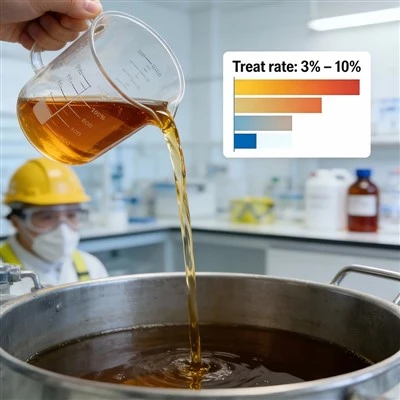
First off, let’s ground this in the basics: this isn’t a one-size-fits-all number. Your gear (a 500HP gearbox is way different than a small compressor, for example), your operating conditions (extreme heat? Dusty environment? 24/7 runs vs. 8-hour shifts), and how you do maintenance (top-up only vs. full oil changes every X months) all play a part. Let’s break this down step by step, no fancy jargon — I’ll throw in the occasional industry abbreviation that you probably already know, and skip the terms that make you reach for a coffee.
Step 1: Start with the “Base Oil Volume” of Your Equipment
This is non-negotiable, and the first mistake I see is guessing. Every piece of industrial gear that uses lubrication has a specified “wet volume” — that’s the amount of oil needed to fully fill the sump, gear casing, or reservoir when it’s completely empty and cleaned. Where do you find this? Your OEM (Original Equipment Manufacturer) manual. If you can’t track that down, hit up a maintenance tech who’s been around — they might have old records, or you can check the gear’s nameplate (it’s usually stamped with specs, sometimes even the oil volume for standard fills).
Here’s a quick example: a standard 100HP helical gearbox might have a base volume of 15 gallons. A larger 1,000HP industrial turbine? That’s 80+ gallons. Don’t make the mistake of estimating — a 5-gallon error on a 15-gallon gearbox means you’re either overfilling (which causes heat buildup, a huge no-no) or underfilling (grinds, premature wear).
Step 2: Account for Oil Burnoff, Leaks, and “Normal” Usage
Once you have the base volume, the next number you need is “consumption rate” — that’s how much oil your gear uses between full changes. This is where conditions matter. If your plant is in a dusty, hot climate, your oil breaks down faster, and you’ll need to top up more often. If you’ve got old seals, even small leaks add up over time.
Industry standard: for most enclosed gearboxes and bearings, normal consumption is about 5-10% of the base volume per month. Wait, let’s test that with our 15-gallon gearbox: 10% is 1.5 gallons a month, 5% is 0.75 gallons. But if it’s running 24/7 in 90°F heat with dusty air? That consumption jumps to 15-20% — so 2.25-3 gallons a month.
Don’t forget leak checks! I had a client last year who calculated a 10-gallon monthly top-up, but turned out they had a tiny seal leak that was losing 3 gallons a week — so they were shorting themselves by a lot because they didn’t add that in. Pro tip: do a quick leak audit every quarter — mark your oil level on the sight glass at the start of the month, check it at the end, and subtract any top-ups you did. That’ll give you a real consumption number for your gear, not the generic rate.
Step 3: Factor in Your Maintenance Schedule (Full Changes vs. Top-Ups)
This is where a lot of teams mess up: are you doing full oil changes every 6 months, or just topping up between changes? Let’s clarify both, because that changes the total amount you need to buy over a year.
Scenario 1: Full Oil Changes + Top-Ups
Let’s stick with our 15-gallon gearbox, base volume 15 gallons, consumption rate 10% (1.5 gallons/month). If you do a full change every 6 months (standard for most gearboxes), here’s the math for 12 months:
- Full changes: 2 x 15 gallons = 30 gallons
- Monthly top-ups: 1.5 gallons/month x 12 months = 18 gallons
- Total annual needed: 30 + 18 = 48 gallons
Scenario 2: Top-Ups Only (No Full Changes)
This is super rare, but maybe for a small, low-stress piece of equipment. Let’s say the same gearbox, consumption 1.5 gallons/month, no full changes: 1.5 x 12 = 18 gallons. But warning: this only works if the oil is still good — most oils break down from heat/contamination in 6-12 months, so skipping full changes will cost you more in gear repairs later.
One more thing: if you’re dealing with open systems (like chain drives, conveyor lubrication) vs. enclosed systems, this changes too. Open systems have way higher consumption — sometimes 20-30% of base volume per month — because oil can drip off or be exposed to contaminants. Don’t use enclosed gearbox numbers for your chain drives, that’s a quick way to run out mid-shift.
Step 4: Add a “Buffer” to Avoid Stockouts
Here’s the part that saves teams from panic orders (and premium rush shipping fees, which I hate — you shouldn’t have to pay extra for basic supplies). Even with perfect math, things go wrong: maybe a gearbox develops a leak, maybe your consumption is higher than usual, maybe supply chains have delays (we all remember those 2021 shortages, right?).
My rule of thumb: add 10-15% to your annual total. For our 48-gallon annual need, that’s 4.8-7.2 gallons, so total to order: ~53 gallons. If you’re a small shop with only a few pieces of gear, stick to 10%; if you’re a large plant with 50+ units, 15% is safer.
Wait, but don’t overdo the buffer. I had a client who added 50% because they “didn’t want to run out” and ended up with 20 gallons of expired oil on their shelves — most industrial lubricants have a 2-3 year shelf life unopened, so only build the buffer for 3-6 months of usage, not a year.
Common Mistakes I See All The Time
Let’s call these out because they’re so avoidable:
- Using old OEM specs: If a machine was installed in 2005, the base oil volume might have changed when they upgraded the gear casing — double-check with a current spec sheet, not a 18-year-old notebook.
- Ignoring oil type: Different oils have different breakdown rates. Synthetic oils last 2x longer than conventional, so your consumption rate is lower — if you calculated with conventional but switched to synthetic, your top-up amount can drop by half.
- Forgetting filtration changes: Every time you change your filter, you might lose a gallon or two of oil during the process — that’s extra you need to account for in your top-ups. I always add 0.5 gallons per filter change (most plants do that every 3-6 months) to the total.
- Mixing equipment types: Don’t use the number for your large turbine for your small hydraulic press — hydraulics often have higher flow rates, so consumption is different.
A Quick Example to Put It All Together
Let’s say you’re a food processing plant with:
- 1 x 200HP conveyor gearbox: Base volume = 20 gallons, operating conditions = dusty/hot (consumption = 15%/month, or 3 gallons/month), full changes every 6 months.
- 2 x small 10HP hydraulic presses: Base volume = 5 gallons each, consumption = 5%/month (0.25 gallons each = 0.5 total/month), full changes every 8 months.
Calculations for 12 months:
- Gearbox: 2 x 20 = 40 gallons full changes + 3 x 12 = 36 top-ups = 76 gallons. Add 10% buffer = 83.6 gallons → round to 85 gallons.
- Hydraulic presses: (1.5 x 2) full changes + (0.5 x12) top-ups = 3 + 6 = 9 gallons. Add 10% buffer = 9.9 → round to 10 gallons.
- Total annual order: 85 +10 = 95 gallons.
That’s it — no fancy formulas, no guesswork, just using real numbers for your gear and conditions.
Industrial Lubricating Oil Now, if you’re still staring at spreadsheets and not sure you got it right, that’s what I’m here for. I’ve helped dozens of plants adjust their lubricant orders to cut waste by 20% and eliminate stockouts — no sales pitch, just actual data from your equipment. Whether you need to tweak your consumption rate, double-check a base volume, or figure out a buffer that fits your maintenance schedule, hit me up to chat through your setup.
References
- National Lubricating Grease Institute (NLGI). 2022. Industrial Gear Lubrication Best Practices.
- Machinery Lubrication Magazine. 2021. Calculating Lubricant Consumption for Industrial Equipment.
- OEM Equipment Manufacturers Association. 2020. Equipment Specification Standards for Lubricant Volume.
MoGen Lubricating Oils
With abundant experience, we are one of the most professional industrial lubricating oil manufacturers and suppliers in China. We warmly welcome you to wholesale custom made industrial lubricating oil from our factory. If you have any enquiry about cooperation, please feel free to email us.
Address: No.8003 Chewang Rd, Economic Development Zone Of Jinan, Shandong Province, China 250301
E-mail: sales@mogenoils.com
WebSite: https://www.mogen-oil.com/
