If you’ve ever walked through a warehouse at 2 a.m. – the kind where the air smells like cardboard and forklift engines hum low enough to rattle your hard hat – you’ve probably seen the same scene 100 times: rows of pallets stacked high, each wrapped tight in that clear, stretchy film that looks like it’s holding the whole operation together. I’ve been on both sides of that aisle, too: first as the guy loading pallets for a regional distributor, then as a stretch film supplier, and now I spend most days talking to warehouse managers who ask me the same question over and over: “How often am I supposed to replace the stretch film on stored pallets?” Pallet Stretch Film
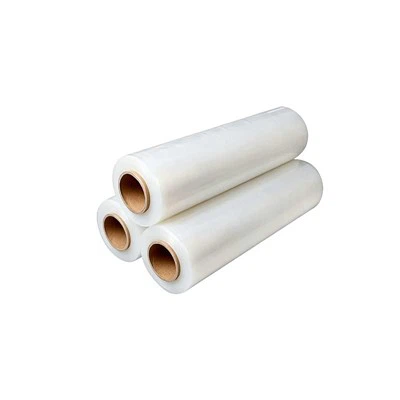
It’s not a silly question, either. I’ve seen warehouses skip film replacement and end up with loads that fall apart mid-shipping, product ruined, orders delayed, and thousands of dollars down the drain. I’ve also seen managers replace film way too often, burning through their budget so fast they can’t afford to restock core inventory. After 12 years in this industry, I can tell you there’s no one-size-fits-all number, but there are concrete factors that tell you exactly when it’s time to swap that old stretch film out.
Let’s start with something basic: what stretch film is actually doing when it’s on a stored pallet. A lot of people think it’s just for keeping boxes from sliding off, but that’s only part of it. Properly applied stretch film is a barrier against dust, moisture, and even light (if you’re using the tinted kind). It holds unit loads tight enough to prevent shifting when the forklift picks them up, and when pallets are sitting in storage for weeks or months, it’s the first line of defense against whatever the warehouse can throw at it – water leaks from a broken ceiling pipe, a nearby pallet that starts leaking, or even curious rodents or bugs.
Now, here’s the hard part: there’s no universal timeline for replacement. A pallet of fresh produce that’s stored in a refrigerated room for three weeks will need totally different film than a pallet of unopened hardware tools sitting in a dry, climate-controlled warehouse for a year. But I’ve narrowed down the key variables that every manager should weigh when deciding if their film is past its prime.
First up, the type of product you’re storing. This is non-negotiable. If you’re wrapping pallets of pharmaceutical components that have to stay sterile, the stretch film is doing more work than just holding boxes together. When that film gets thin, develops micro-tears, or turns cloudy (a sign the plastic is breaking down), it stops being a barrier against contaminants. I had a client last year who wrapped pallets of medical syringes with film that was 6 months old. By the time they pulled the pallets to ship, the film had tiny holes from rubbing against adjacent metal racks, and they had to throw out 20,000 units because they’d been exposed to warehouse dust. For products like meds, food, or any item that needs to stay clean and intact, the rule is simple: inspect every 30 days, and replace the film immediately if you see any damage, even if it’s only been on the pallet for a month.
On the opposite end, if you’re storing heavy, rigid items like steel pipe or empty plastic barrels in a dry, out-of-the-way section of the warehouse, you can stretch that timeline a lot further. I’ve had clients wrap pallets of construction lumber that sat in storage for 18 months, and when they unwrapped them, the film was still intact enough to hold the load together – though they did end up replacing a few spots where the edge of a board had rubbed through the film after 12 months. Even for these tough loads, though, I recommend a full film replacement every 12 to 18 months, and a spot check every 90 days to fix any small tears before they turn into big problems.
Next, the storage conditions themselves will make or break how long your stretch film lasts. Let’s talk about temperature first. If your warehouse is in a part of the country that gets extreme heat – like Texas or Arizona, where summer temps can hit 110 degrees inside a metal building – stretch film breaks down way faster. The plastic molecules start to stretch out and lose their tension, turning from that tight, clear wrap to something that looks saggy and foggy in as little as 4 months. I had a client in Houston who was replacing film every 6 months until we adjusted their process: we started using a UV-resistant film rated for high heat, and now they only replace it once a year. On the flip side, if you’re storing pallets in a cold storage facility (below 40 degrees), the film becomes brittle. It cracks easily when you handle the pallet, so you have to inspect it every 60 days and replace it if it’s starting to crumble.
Humidity is another big one. If your warehouse has a leaky roof, or you’re storing pallets in a area that gets damp (like near a loading dock that leaks when it rains), moisture eats away at stretch film faster than anything else. When film absorbs water, it starts to degrade, getting weak and turning yellow. I worked with a client in the Pacific Northwest a few years ago who had pallets stored near a loading dock that flooded twice a year. Their old film was lasting 3 months max, but switching to a water-resistant, high-density film doubled that lifespan. Now they replace it every 6 months, and they haven’t had a moisture-related product loss in three years.
Then there’s the way you’re applying the film in the first place. This is something a lot of warehouse managers overlook – bad application cuts the life of your film in half, no matter what product or conditions you’re dealing with. If your forklift operators are stretching the film too tight when they apply it, it will snap and lose tension way faster. I’ve seen operators pull film so tight that it thins out to almost transparency after a week, which means it’s not providing any structural support. On the other hand, if they’re not stretching it enough, the film will sag, and wind or forklift movement will rip it apart. The sweet spot is stretching film to about 200% of its original length – that’s the standard for most warehouse jobs, and it lets the film maintain tension for longer, so you don’t have to replace it as often.
I also tell all my clients to watch how they wrap the pallets. If you’re only wrapping the bottom third of the pallet, that’s where all the weight sits, so that film will wear out first. You need to wrap the entire pallet, from the bottom all the way up to the top, overlapping each layer by at least 50%, so there are no gaps. I had a small manufacturing client a while back who was only wrapping the bottom half of their pallets, and they were replacing film every 4 months. Once we showed them how to do a full, overlapping wrap, that went up to 10 months – a huge saving for their budget.
Now, let’s talk about red flags that tell you it’s time to replace the film, no matter what the calendar says. These are the signs I always tell my customers to look for during their monthly checks: first, tears or holes. Even a tiny tear can turn into a big problem if it’s not fixed, because dust and moisture can get in, and the rest of the film will start to unravel. Second, fogginess or cloudiness. Clear stretch film should stay clear for months – if it’s turning white or yellow, that’s a sign the plastic is breaking down, and it won’t hold the load together much longer. Third, sagging or loose film. If the film isn’t tight against the boxes or product, it’s not doing its job, and it’s time to replace it. Fourth, damage from pests. If you see chew marks or rodent holes, don’t wait – replace the film right away, because those bugs or rodents will get to your product if you don’t.
Wait a second, though – I don’t want you to get the wrong idea. I’m a stretch film supplier, so it’s in my interest to sell more film, but that’s not what this is about. I’ve seen enough warehouses waste money on unnecessary film replacements, and enough lose money because they waited too long to replace it. The sweet spot, for most standard warehouse applications (non-refrigerated, non-food, rigid products), is inspecting your stretch film every 90 days, and doing a full replacement every 12 months. For high-risk products or extreme conditions, that inspection window shrinks to 30 days, and replacement every 6 months. For low-risk, dry, controlled environments, you can stretch that to every 18 months, as long as you check it every 120 days.
I also want to mention that not all stretch film is the same. There’s a reason I don’t just sell one type of film – because one size doesn’t fit all. The cheap, thin film you can buy in bulk online might cost less upfront, but it tears easily, breaks down fast, and will have you replacing it every 3 months. The higher-quality, pre-stretched film I supply might cost a little more per roll, but it lasts twice as long, holds loads better, and saves you money in the long run. I had a client last year who was buying $10 rolls of generic film and replacing them every 2 months, costing them $60 a month. They switched to the $25 rolls of quality film we sell, and now they replace them every 8 months, cutting their film costs by 50%. That’s the kind of math that makes sense for any warehouse budget.
I’ve been doing this long enough to know that warehouse schedules are busy, and adding another task – inspecting stretch film every month – might seem like a hassle. But let’s be real: one load of ruined product is way more expensive than a few extra minutes of inspection. Last year, a client of mine who skipped inspecting their film had a pallet of electronics fall off a forklift because the film had stretched too thin, and the whole load got crushed. That cost them $12,000 in product, plus the cost of labor to clean up the mess and replace the order. If they’d just checked that film a week earlier, they could have replaced it for less than $50, and avoided that whole disaster.
At the end of the day, the question of how often to replace stretch film on stored pallets isn’t a number you can pull out of a handbook. It’s a balance of your product type, your warehouse’s conditions, how well your team applies the film, and how closely you pay attention to the signs of wear. I’ve worked with small, 5,000-square-foot warehouses and big 100,000-square-foot distribution centers, and the ones that avoid costly mistakes and save money on film are the ones that take the time to check their loads regularly, use the right film for their needs, and don’t wait until the last minute to replace worn wrap.

If you’re tired of playing guesswork with your stretch film replacements, or you’ve had enough of product damage from worn wrap, I’m here to help. We work with warehouses of all sizes, from small local manufacturers to national distribution centers, to figure out the right film type and replacement schedule for your specific needs. We don’t push more film than you need – we help you use less, save money, and keep your loads safe. Whether you’re dealing with refrigerated products, heavy construction materials, or anything in between, we can walk you through the best way to maintain your stretch film for maximum efficiency.
Industrial Saran Wrap References:
- Warehouse Stretch Film Best Practices, Industrial Packaging Association, 2022
- “Factors Affecting Stretch Film Lifespan in Storage Facilities”, Journal of Supply Chain and Logistics, Vol. 18, No. 2, 2021
- Pallet Unit Load Integrity Standards, Material Handling Industry Association, 2023
- Temperature and Humidity Effects on Stretch Polyethylene Film Degradation, Polymer Testing Journal, Vol. 40, 2020
Zhejiang Dongfang Wanxiang New Materials Co., Ltd.
As one of the most professional pallet stretch film manufacturers in China, we’re featured by quality products and good price. Please rest assured to buy advanced pallet stretch film made in China here from our factory. Contact us for pricelist.
Address: Building 1, 1st Floor, No. 10 Jinwang Road, Changkou Town, Fuyang District, Hangzhou City, Zhejiang Province
E-mail: 56124228@qq.com
WebSite: https://www.wxmaterial.com/
