Hey there, fellow home espresso lovers! Let’s cut to the chase—there’s nothing more jarring than firing up your morning shot only to hear your machine sound like it’s gargling a cat, or whirring so loud it wakes the whole neighborhood. If you’re here, chances are you’ve been staring at your espresso machine like it’s speaking a weird, broken language, wondering, “Why is my machine making all these strange noises?” As someone who’s worked as a home espresso machine supplier for years, I’ve seen this exact panic play out with hundreds of customers. Today, we’re breaking down the science behind those weird sounds, no stuffy tech jargon—just real talk, and what you can do to fix ‘em. Home Espresso Machine

First, let’s get one thing straight: espresso machines are simple, but they’re full of tiny moving parts and water under pressure. So noise isn’t always a red flag. A little hum when the pump kicks on? That’s normal. But if it’s a screech, a clank, a bubbling rattle, or a high-pitched whine that makes your coffee cup rattle? That’s a problem—and each sound has a pretty specific cause. Let’s run through the most common ones, one by one.
First up: that gurgling, bubbling noise mid-brew. It’s like your machine is trying to boil water in a tiny pot, and it’s awful. Why’s that happening? I’ve seen this way more often than I’d like—usually because of air in the lines. Wait, don’t zone out on me here—air in the hoses and the pump is actually super common, especially if you haven’t used your machine in a couple days, or if you just refilled your water reservoir. Here’s the science: when water’s moving through the machine, it should be a continuous stream, right? If air gets trapped, it creates little pockets that shake against the metal pump and boiler, making that bubbling rattle. It’s basically the same thing as when you open a soda can that’s been shaken up—you get that fizz and gurgle. For home users, this is usually an easy fix. Try purging the machine: turn it on, let it warm up, then open the steam wand (make sure it’s not attached to any frothing devices) and let water run through for 10-15 seconds. That pushes the air out of the lines. If you’re still getting the gurgle, check your portafilter—sometimes it’s not seated tight enough, letting air sneak in there mid-brew.
Next, that high-pitched whine that only happens when the pump’s running. That one’s a little trickier. Most of the time, this is a worn pump or a pump that’s starved for water. Wait, pump starvation? Let’s explain: your pump needs a steady supply of water to work. If the water coming in is too slow, or there’s a partial blockage, the pump has to work way harder than it’s designed to. That creates that sharp, high-pitched whine. What causes pump starvation? Two big culprits for home users. First, a clogged water filter. If you use a built-in filter in your reservoir (or the inline filter some machines have), coffee grounds, limescale, and sediment build up over time, blocking the flow. Second, a kink in your water line, or even a reservoir that’s not pushed all the way in correctly. I’ve had customers tell me they swear their reservoir is in right, but it’s sitting a little off, so the water can’t get to the pump fast enough. Another less common (but still home-user-friendly) cause: your pump’s impeller is a little stuck. The impeller is the tiny fan-like part inside the pump that pushes water. If there’s a build-up of limescale or coffee oils on it, it can’t spin smoothly, leading to that whine. If you’re dealing with that, start with the basics: replace your water filter (yep, even if it’s not “due” yet—old filters get clogged fast), double-check your reservoir is seated right, and if the whine’s still there, descale your machine. Wait, descaling—let’s talk about that, because limescale is the enemy of every espresso machine, and it causes so many noises.
Limescale, by the way, is that white crusty stuff that builds up inside boilers, lines, and pumps when hard water evaporates. It’s not just gross—it’s thick, like cement, and it doesn’t mix well with moving parts. If you skip descaling, limescale can build up on heat exchangers, clog small holes, and make the machine work overtime. That leads to a bunch of noises: clanks from water hitting limescale deposits, or the heat pressure spiking and making a screech. I can’t tell you how many times a customer has called me panicking because their machine’s making a grinding noise, and it turns out they haven’t descaled in 6 months. Pro tip: if you live in a hard water area (most places in the US, parts of Europe, and Australia are), descale every 2-3 months. If your water’s soft, every 6 months max. It’s way cheaper than replacing parts.
Now, for the clanking or rattling noise that sounds like a loose part. That’s usually something simple, but not always. Let’s start with the easy stuff first. Your portafilter: if it’s not locked in all the way, the pressure from the brew can make it vibrate, leading to a clank. Or the baskets inside the portafilter—if they’re loose, or have a bent edge, they can rattle. Check that first, super easy to fix. Then, the group head (that’s where the portafilter connects): if there’s old coffee grounds or limescale gunk built up around the seal, it can make the group head rattle when you attach the portafilter. Wipe it down with a damp cloth after every use, that’ll prevent that. The less common (but still fixable at home) clanking: a loose steam wand. If the wand’s not screwed on tight to the boiler, it can vibrate and make a clank when you’re frothing milk. Just turn it clockwise until it’s snug—don’t overdo it, you don’t want to break the threads.
Now, the noises you can’t fix at home: a grinding noise that gets progressively worse, or a deep, guttural rumble that sounds like something’s broken. That’s almost always the pump starting to fail. Pumps on home espresso machines are built to last, but they’re not indestructible—especially if you’ve skipped descaling, or run them when they’re starved for water too many times. A pump that’s grinding is basically saying, “I’m working way too hard, and I’m gonna give out soon.” If you’re handy, you can replace a pump yourself, but I’ll be honest—most home users don’t want to mess with that. That’s where a good supplier like me comes in, right? We’ve got replacement pumps for most major home machine brands, and we can walk you through the process if you’re comfortable, or even connect you with a local tech if you’re not.
Wait, let’s talk about something I see all the time: people ignoring weird noises because “it still makes coffee.” I get it—you’re busy, the machine works, so why fix it? But those noises are early warning signs. A whine now might turn into a dead pump in a month. A gurgle might be a clogged line that gets worse and starts making your shots taste weird. Don’t wait until your machine dies mid-morning rush. A quick check-up, a descale, a filter change—most of the time, that’s all it takes to kill the weird noises.
Let me throw in a quick real story here—my buddy, he’s a barista at a local cafe, had a home machine he used every day. He ignored a tiny whine for two weeks, figured it was normal. Then one morning, mid-shift, the pump seized up. He had to run to the store, buy a cheap machine just to make his own shots for the day, and it cost him way more than if he’d just descaled and changed the filter like I told him. Moral of the story: don’t skip the small stuff.
Now, let’s recap the quick fixes for common noises, so you can reference this when your machine acts up:
- Gurgling/bubbling: Purge the lines, check the portafilter is seated tight.
- High-pitched whine: Replace the water filter, descale, double-check reservoir is in place.
- Clanking/rattling: Tighten portafilter, steam wand, wipe group head seal.
- Grinding/rumbly noise: Time to check the pump—either fix it yourself, or reach out for help.
If you’ve tried all that and the noises are still there, don’t stress. Every machine acts up sometimes. That’s why being a home espresso supplier isn’t just about selling machines—it’s about helping people keep ‘em running. We stock parts for almost all popular home models, from the entry-level ones you picked up at a big box store to the fancy semi-pro ones. And if you’re not sure what part you need, just shoot us a message with your machine model and a quick description of the noise, and we’ll help you out. No confusing menus, no automated bots—just actual people who know espresso machines inside and out.
Wait, one last thing: I get asked all the time, “Is a little noise normal?” Like I said earlier, a soft hum when the pump turns on? That’s totally normal. If your machine is sitting quietly, then kicks on with a low hum, you’re good. But if you’re turning it on and it sounds like a lawnmower is trapped inside, or the noise changes from brew to brew? That’s not normal. Trust your gut—if something feels off, it probably is.
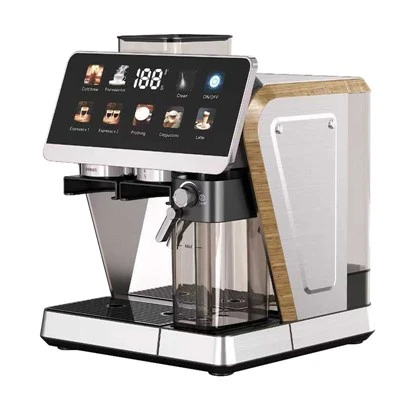
So there you have it—no fancy tech degree required to figure out why your espresso machine is making weird noises. Most of the time, it’s a simple fix, not a big, expensive problem. And if it is a bigger issue, we’re here to help. Whether you need a replacement pump, a new filter, or just someone to walk you through descaling, we’re just a message away. Don’t let a weird noise ruin your morning shot—reach out, and let’s get your machine back to making great coffee, quiet and smooth.
Espresso Machine References
- Specialty Coffee Association. (2022). Home Espresso Machine Maintenance Guide.
- International Coffee Organization. (2021). Limescale Formation and Impact on Small Kitchen Appliances.
- Barista Institute. (2023). Common Noise Issues in Home Espresso Machines and Troubleshooting Tips.
- Consumer Reports. (2022). Maintaining Your Home Coffee Equipment to Extend Lifespan.
Foshan City Moccona Electric Co., Ltd.
With abundant experience, we are one of the leading manufacturers and suppliers of home espresso machine in China. We warmly welcome you to buy bulk durable home espresso machine from our factory. If you have any enquiry about cooperation, please feel free to email us.
Address: Room 202, Building 16, Tongde Intelligent Manufacturing Park (TDIMP), No.9 Guizhou Avenue East, Shangjia Community, Ronggui Street, Shunde District, Foshan City, Guangdong Province
E-mail: tim@mocconaelectric.com
WebSite: https://www.mocconaelec.com/
