If you’ve ever run a hand over a smooth, stretchy fabric that holds its shape no matter how often you bend it—think of the waistband of your favorite workout leggings, the soft lining of a winter jacket, or even the elastic strands in a well-made pair of socks—you’ve almost certainly interacted with nylon covered yarn (NCY) without even knowing it. For 12 years, I’ve run a small NCY supply business, and I still get questions from new clients, even fabric designers who’ve been in the industry for decades, asking: what exactly is this material, and why does it matter so much for the products people actually use? Nylon Covered Yarn
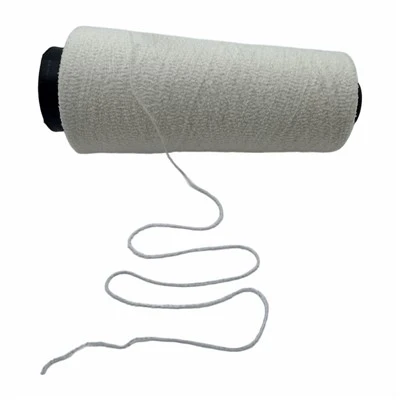
Let me break it down simply, no overly technical jargon that’ll make your eyes glaze over. At its core, nylon covered yarn is a type of composite yarn made from two distinct components: a core filament and a outer sheath. The core is almost always an elastic material—9 times out of 10, it’s spandex, sometimes called elastane. That’s the part that gives the yarn its signature stretch, the ability to snap back into shape after being pulled, whether you’re reaching to tie your workout laces or stepping into a tight pair of jeans. The outer sheath is nylon, a synthetic polymer that’s prized for its strength, durability, soft hand feel, and resistance to pilling and fading. We wrap the nylon tightly around the spandex core, under precise tension, to create a yarn that blends the best of both worlds: the stretch of spandex and the toughness of nylon.
It’s not a random wrap, either. The way we apply the nylon sheath makes all the difference. We use a specialized machine called a twister or a covering machine, which feeds the spandex core through the center while the nylon filament is twisted around it at a controlled rate. The twist count can be adjusted depending on what the yarn will be used for—we use a tighter twist for heavy-duty applications like industrial work gloves, and a looser, more gentle twist for delicate items like children’s clothing or loungewear. That level of customization is why NCY is such a versatile material, not just a one-size-fits-all component.
A lot of new customers come to me and ask why we don’t just use pure spandex or pure nylon instead of combining them. Let’s get that out of the way first. Pure spandex is incredibly stretchy, but it’s thin, prone to snagging, and doesn’t hold up well to wear. If you made a pair of leggings out of 100% spandex, they’d stretch out after a few wears, feel flimsy, and snag on the first rough edge they came across. Pure nylon, on the other hand, is strong and durable, but it has almost no stretch at all. It won’t move with your body the way a good waistband should, and clothing made from pure nylon would feel stiff and restrictive, like a raincoat that doesn’t bend when you raise your arms. NCY fixes both of those problems, creating a material that’s as functional as it is comfortable.
Now, let’s talk about what makes our NCY different, because not all suppliers are created equal. When I first started this business, I learned the hard way that cutting corners on material quality comes back to haunt you. Early on, I tried a cheaper grade of spandex core to undercut a competitor’s price, and within three months, we had three separate clients return thousands of yards of yarn because their finished products were stretching out after just a few washes. That mistake taught me to prioritize consistency over cost, and it’s a lesson I’ve carried every day since. Today, we use only 95D to 200D grade spandex cores from manufacturers that test their material for stretch recovery—meaning it can be stretched to twice its length and snap back to original form 98% of the time, no give. For the nylon sheath, we use 100% virgin nylon 6, not recycled nylon or lower-grade nylon that’s full of impurities. Virgin nylon has a softer hand feel, better color retention, and higher tensile strength, which means our yarn lasts longer in finished products.
We also offer a range of customizations that set us apart. Some clients need NCY with a matte finish for high-end activewear, so we use matte nylon sheath instead of the standard bright, shiny nylon. Others are working on technical sportswear that needs to be moisture-wicking, so we can blend a small percentage of polyester or polypropylene into the nylon sheath during the covering process to boost breathability. We can also dye the nylon core before wrapping it, so the yarn comes out exactly the color the client needs, cutting down on dyeing steps for their manufacturing line. That level of flexibility is key, because every fabric application has unique needs.
Let’s walk through some of the most common uses for NCY, to give you a real sense of how integral it is to everyday products. The biggest use is in activewear, which has exploded over the last 15 years. Workout leggings, sports bras, compression shirts—all of these use NCY for their waistbands, leg openings, and chest bands. The nylon sheath makes the fabric durable enough to withstand repeated washing and sweat exposure, while the spandex core gives it the stretch to move with runners, yogis, and weightlifters. Even casual loungewear, like joggers and hoodie cuffs, uses NCY to keep those cuffs from sliding down your arms or ankles.
Another huge application is in the footwear industry. The elastic bands in sneaker uppers, the drawstrings for shoes, and even the inner linings of work boots often use NCY. The nylon sheath stands up to constant friction from socks and pant legs, while the spandex core stretches to fit different foot sizes comfortably. We also supply NCY to manufacturers of elastic for medical applications, like compression bandages and orthopedic braces, where stretch recovery and durability are non-negotiable.
Less obvious but equally important uses include upholstery and automotive textiles. Car seat belts and interior trim often use NCY, because it needs to stretch slightly to fit the curved shapes of car interiors while resisting fading from sun exposure and wear from people getting in and out of the car. Even craft products, like hair scrunchies and elastic for sewing projects, use NCY, since it’s soft on skin and doesn’t pill after repeated use.
I know a lot of suppliers will try to sell you on their material by talking about technical specs, but I want to be honest with you about the biggest challenges we face with NCY. If it’s not manufactured to precise tensions, it can develop “barre,” which is that bumpy, uneven texture you sometimes see in elastic bands. Or the twist can be too tight, making the yarn too stiff to work with on knitting or weaving machines, leading to wasted material for the end client. That’s why we do 100% quality checks on every batch we produce—we test stretch recovery, twist consistency, and sheath adherence before we ship it out, to make sure it works for your specific application.
A common question I get from new clients is about sustainability, which is top of mind for most fabric manufacturers now. We’ve made big investments over the last three years to offer more eco-friendly NCY options. We work with a supplier who makes recycled spandex from post-consumer plastic bottles, and we offer recycled nylon sheath options made from fishing nets and industrial plastic waste. We also have a closed-loop water system in our manufacturing facility that cuts down on water use for dyeing and processing by 40% compared to older methods. That doesn’t mean we sacrifice quality—our recycled NCY has the same stretch recovery and durability as our virgin grade, so you don’t have to choose between sustainability and performance.
At the end of the day, NCY is a material that people rely on every single day, without even thinking about it. It’s the quiet workhorse of the textile industry, bridging the gap between stretch and strength, comfort and durability. For me, that’s what makes this job so rewarding: I’m not just supplying a yarn, I’m helping brands create products that people love to wear and use. Whether you’re a small boutique activewear brand looking for custom colored yarn, a large automotive manufacturer needing bulk NCY for interior components, or someone just curious about the material in your favorite leggings, I can walk you through every step, from choosing the right core and sheath to getting a batch tailored exactly to your needs.
If you’re in the market for nylon covered yarn—whether it’s for a small test batch or a large production run—we’d love to hear from you. We work with clients of all sizes, from start-ups to global brands, and we’re always happy to answer any questions you have about material specs, customization options, or pricing. Reach out to our team to schedule a consultation and learn how our NCY can elevate your next product line.
Polyester Double Covered Yarn References
Textile Institute. (2020). Composite Yarns: Technology and Applications. Woodhead Publishing.
Hearle, J. W. S. (2017). Synthetic Fibers and Yarns: Structure, Properties, and Performance. CRC Press.
International Organization for Standardization. (2019). ISO 1806: Textiles – Yarn – Determination of Elastic Recovery.
Zhuji Yuanhui Import & Export Co., Ltd.
Zhuji Yuanhui Import & Export Co., Ltd. is one of the most professional nylon covered yarn manufacturers and suppliers in China. With abundant experience, we warmly welcome you to buy high-end nylon covered yarn made in China here from our factory. If you have any enquiry about quotation and free sample, please feel free to email us.
Address: No.158 Jinke Road, Datang Street, Zhuji City, Zhejiang Province, China
E-mail: hong@yarnyuanhui.com
WebSite: https://www.yarnfty.com/
