If you’ve walked past a construction site recently, stopped at a community garden, or even popped into a warehouse restocking after a busy weekend, you’ve probably seen a power sprayer. For decades, these tools have been the go-to for applying herbicides to overgrown lots, distributing pesticides to crop rows, or even rinsing down large equipment. But in the last few years, as public health priorities shifted and people started looking for more efficient ways to sanitize large, high-traffic spaces, one question has come up over and over in my inbox as a power sprayer supplier: Can a power sprayer actually be used for sanitizing? Power Sprayer

The short answer is yes—but only if you use the right model, the right cleaning solutions, and stick to best practices that ensure sanitization works as intended. I’ve spent 12 years selling power sprayers to everything from small landscaping teams to municipal public works departments, and I’ve seen first-hand how a tool designed for one job can adapt to another when used correctly. But I’ve also seen what happens when people grab the first sprayer they have lying around and cut corners, leading to wasted supplies, ineffective cleaning, or even damage to surfaces. Let’s break this down like I would with any customer who walks into my shop asking about using their sprayer for sanitization.
First, let’s get one key term straight: sanitization isn’t the same as disinfection, though people often use them interchangeably. Sanitizing reduces the number of harmful microorganisms on a surface to safe levels, per public health standards, while disinfection kills nearly 100% of them. For most everyday spaces—break rooms in a manufacturing plant, playground equipment, loading docks, or even the exterior of delivery vehicles—sanitization is enough to meet health requirements. Disinfection is reserved for spaces that have had a known exposure to pathogens, like a doctor’s office exam room or a school classroom after a contagious student was present. Power sprayers work for both, but the details change a bit.
Now, why would someone choose a power sprayer over a simple garden hose, a pump spray bottle, or a backpack sprayer for sanitization? The biggest benefit is coverage. A handheld pump sprayer might cover a 10-square-foot area in 2 minutes; a good electric or gas-powered power sprayer can cover 1,000 square feet in the same time. That’s a game-changer for large spaces: think a 50,000-square-foot warehouse floor, a 10-unit apartment building’s common areas, or a municipal parking garage. You can’t reasonably expect a team of 10 people with spray bottles to sanitize a parking garage in an hour, but a single operator with a power sprayer can do that job quickly and consistently. Consistency is another big win. Power sprayers deliver a uniform volume of solution per square foot, which means you don’t have to worry about over-spraying some areas and missing others. With a spray bottle, it’s easy to skip a spot, especially if you’re rushing.
But here’s where most people go wrong: not all power sprayers are created equal for sanitization. If you grab a heavy-duty gas sprayer made for spraying 2,4-D herbicide, that’s not a good fit. Why? Two main reasons. First, those models are built to handle thick, viscous liquids—herbicides often have solvents and thickening agents that require a high-pressure nozzle to atomize properly. For sanitizing solutions, which are mostly water (unless you’re using a commercial disinfectant that’s more concentrated), you don’t need that high pressure. In fact, high pressure can cause over-spray: the mist goes airborne for longer, leading to wasted solution, and it can also damage delicate surfaces, like painted metal or woodwork, by forcing the cleaning solution into tiny cracks or peeling paint over time. It can also be a safety hazard if the spray hits someone’s eyes or skin at high speed.
What you want for sanitization is a low-to-medium pressure power sprayer, typically rated between 50 and 150 PSI, with an adjustable nozzle. A fan nozzle is ideal here because it produces a wide, even spray pattern that covers a large area without being too fine (fine mist can evaporate before it even touches the surface you’re cleaning) or too coarse (large droplets run off, leaving bare spots). Battery-powered electric sprayers are perfect for most small to mid-sized sanitization jobs: they’re lightweight, easy to maneuver, and don’t require a gas line or a fuel tank, so there’s no risk of gasoline contaminating your sanitizing solution. For larger jobs, like a 10-acre campus or a municipal facility with multiple buildings, a tow-behind power sprayer with a 50-gallon or 100-gallon tank makes sense—you can refill it once every few hours, instead of every 15 minutes like a backpack sprayer, which cuts down on downtime.
The next critical part is choosing the right sanitizing solution to pair with your sprayer. Not all solutions work with all sprayer parts, so that’s a detail I always walk customers through. First, never mix chlorine bleach (one of the most common and affordable sanitizers) with acidic cleaners or ammonia— that creates toxic fumes. But even if you’re just using plain bleach solution (1/3 cup of bleach per gallon of cool water, per EPA guidelines for general sanitization), you need to rinse your sprayer thoroughly after use if you’re going to use it for other jobs later. Bleach is corrosive, and if you leave it in a sprayer tank for days, it can eat away at hoses, seals, and even the tank itself over time. For regular sanitization, there are also non-corrosive, EPA-registered disinfectants and sanitizers made for use in sprayers—these are a little more expensive upfront, but they don’t damage equipment and are formulated to work well with spray nozzles, so you get even coverage without clogs.
Wait—clogs. That’s another big one I hear about. If you’re using a solution with additives, or even if your sprayer tank isn’t clean between uses, the nozzle can get clogged with residue, leading to uneven spray or no spray at all. I always recommend that anyone using a power sprayer for sanitization keep a small brush and a set of spare nozzles on hand. Every time you finish a job, rinse the tank with clean water, run water through the sprayer to flush out any leftover solution, and then wipe down the nozzle with the small brush to remove any debris. If you do get a clog, don’t try to unclog it with a pin or wire— that can scratch the inside of the nozzle, leading to uneven spray patterns later. Most nozzles are easy to take apart and rinse with warm, soapy water, which is all you need for most clogs.
Now, let’s talk about real-world examples, because that’s what matters most. Last year, I worked with a school district in rural Ohio that had a budget to sanitize 12 school buildings after the start of the school year. Before they started, they were using backpack sprayers and spray bottles, and it was taking their custodial team 8 hours a day to do just the common areas—hallways, cafeteria, gyms, and playgrounds. They came to me looking for a faster solution, and we ended up recommending 8 battery-powered electric power sprayers, rated at 100 PSI, with adjustable fan nozzles. The custodial team worked with the district’s health department to use EPA-registered, non-corrosive sanitizer that was safe for all surfaces, and they trained for half a day on how to set the nozzle, adjust the pressure, and clean the sprayers after each use. The result? They cut their sanitization time in half, down to 4 hours a day, and the district reported that the sanitization was more consistent because there were no missed spots or uneven coverage. They didn’t have any issues with clogs or equipment damage, and six months later, they still use those same sprayers for regular monthly sanitization, plus they use them in the summer to spray playground mulch to prevent mold.
Another example: a small food processing plant in Iowa that needed to sanitize their production lines, conveyor belts, and storage bins. They were using manual pressure sprayers before, and they were struggling to reach the high tops of the storage bins without ladders, and the manual sprayers were inconsistent, leading to occasional food safety audits that came back with minor concerns about microbial counts. We recommended a small tow-behind power sprayer with a 30-gallon tank, attached to a wand with a 10-foot extension, so operators could reach the high bins without climbing. They use a food-grade sanitizer, and since they switched, their audit scores have been perfect, and they’ve cut their sanitization labor time by 60%. The sprayer has also doubled as a tool for rinsing down equipment at the end of production runs, so they’re getting more use out of the investment.
Of course, there are limits to what a power sprayer can do for sanitization. It’s not a replacement for manual scrubbing. If you have a surface that’s caked with dirt, food residue, or grime, a power sprayer alone won’t remove that— the sanitizer won’t kill bacteria and viruses that are trapped under that dirt. You need to first clean the surface by hand, using a rag or a brush to remove debris, then use the power sprayer to apply the sanitizer evenly, so it can reach all the areas you couldn’t scrub. That’s a step I never skip telling customers, because if they skip the scrubbing step, the sprayer won’t do the job right, and they’ll end up wasting time and money.
Another limit: very fine, porous surfaces. If you’re trying to sanitize a porous surface like a porous concrete floor that has tiny cracks and holes, a power sprayer’s mist might not penetrate those holes as well as manual application, because the mist can evaporate before it seeps in. For those surfaces, you might want to pair a low-pressure sprayer with a mop or a broom to work the sanitizer into the cracks, so it can kill all the microorganisms. But for hard, non-porous surfaces, like metal, plastic, painted wood, or tile, power sprayers are perfect.
I also get asked a lot about safety. Sanitizing solutions can be harsh, especially bleach or strong disinfectants, so you need to take safety precautions when using a power sprayer. Wear gloves, eye protection, and a face mask to avoid breathing in any mist, even low-pressure mist. Make sure the area you’re sanitizing is well-ventilated, so fumes don’t build up. And never leave a power sprayer unattended when it’s full of sanitizer, especially if it’s battery-powered— a child or pet could accidentally knock it over, leading to spills. If you’re using a gas-powered sprayer, make sure it’s turned off and cool before refueling, and never refuel near a sanitizer tank, to avoid mixing flammable gasoline with chemicals.
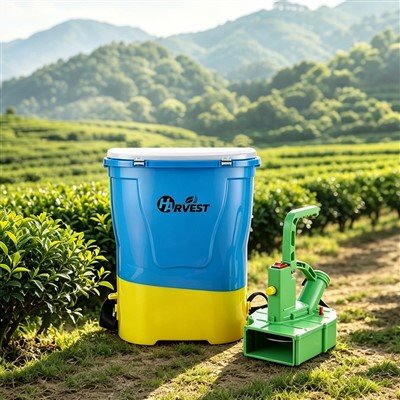
So, to circle back to the original question: Yes, a power sprayer absolutely can be used for sanitization, when you choose the right model, pair it with the right solutions, follow best practices for use and maintenance, and don’t skip the manual cleaning step. It’s not a one-size-fits-all tool, but for most medium to large sanitization jobs, it’s one of the most efficient and cost-effective tools you can use.
Electric Mist Duster If you’re thinking about adding a power sprayer to your sanitization routine, or you have questions about which model would work best for your specific job—whether you’re a school, a food processing plant, a municipal department, or a small business—feel free to reach out to our team to discuss your needs and find the right solution for you. We can also share resources on proper sanitization techniques, solution mixing, and sprayer maintenance to make sure you get the most out of your investment.
References
- U.S. Environmental Protection Agency. (2023). Guidelines for Sanitization and Disinfection of Non-Medical Surfaces. EPA Office of Chemical Safety and Pollution Prevention.
- National Pest Management Association. (2022). Best Practices for Using Power Sprayers for Sanitation and Pest Control. NPMA Technical Advisory Committee.
- Occupational Safety and Health Administration. (2021). Safety Guidelines for Chemical Application Equipment in Commercial and Industrial Settings. OSHA Office of Occupational Safety.
- Food and Agriculture Organization of the United Nations. (2020). Sanitization Protocols for Food Processing Facilities Using Power Sprayers. FAO Agriculture and Consumer Protection Department.
Taizhou Tianyi Agriculture & Forestry Machinery Co., Ltd.
As one of the most professional power sprayer manufacturers and suppliers in China, our products have good reputation in the market. Please rest assured to wholesale customized power sprayer made in China here from our factory. If you have any enquiry about quotation, please feel free to email us.
Address: 2988 Binkang Avenue, Taizhou Bay New District, Taizhou, Zhejiang, China
E-mail: info@cnsprayers.com
WebSite: https://www.cnsprayers.com/
