If you’ve ever used a line laser module for framing, tiling, or even DIY project alignment, you’ve probably wondered: can these tiny, powerful tools throw a crisp straight line when the surface they’re pointing at isn’t perfectly flat? As a line laser module supplier, I get this question all the time—from tradespeople on job sites to hobbyists building shelves in their garages. The short answer isn’t a simple yes or no, so let’s break it down like we’re chatting over a cuppa, no jargon, just real talk. Line Laser Modules
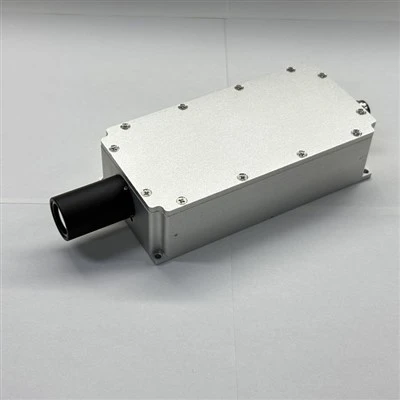
First, let’s get the basics straight (pun intended) about how line lasers work, because that’s key to understanding their limits. A line laser module has three core parts: a laser diode that emits a narrow beam of light, a lens (usually a cylindrical one) that stretches that single dot into a flat 2D line, and a housing that keeps everything aligned tight. When the surface you’re targeting is even, drywall, tile, a flat wooden board, that line is basically perfect—because the lens turns the laser’s consistent, straight beam into a consistent, straight line. The problem starts when the surface isn’t flat; things like a wavy concrete floor, a textured brick wall, or a curved pipe aren’t uniform, so the light doesn’t land the same way everywhere.
Wait, let’s test that with a relatable example. Last month, a carpeter friend hit me up because he was trying to install baseboards in an old house where the walls were uneven from 100 years of settling. His old leveler kept bouncing because it couldn’t compensate for the tiny dips and bumps, so he thought his line laser was broken. Turns out, the line was straight relative to the laser’s own plane, but the wall’s unevenness made the line look crooked from his angle. That’s a common mix-up: the line laser’s line is straight in the space it’s projected, but uneven surfaces can distort how that line looks or functions, depending on what you need it for.
Now, what if someone actually needs the line to follow an uneven surface? That’s where a lot of folks get confused. Basic fixed line laser modules (the ones most of us sell for standard use) project a line that’s straight along a fixed horizontal or vertical plane. If that plane runs parallel to the laser’s axis, it won’t bend to match a bumpy surface. But here’s the thing: not all line lasers are made the same. We offer adjustable line laser modules with beam alignment tweaks that can soften the edge of the line a little, which helps when the surface has minor texture—like a rough plaster wall. That softer line isn’t less accurate; it just spreads out a tiny bit, so when it lands on a slightly bumpy surface, the line doesn’t break up into individual dots. It’s like shining a flashlight on a textured wall vs. a flat one: the textured one makes the light look spotty, but a wider beam minimizes that effect.
But here’s the catch: major unevenness, like a surface with drops of half an inch or more, will throw even the best line laser for a loop. Why? Because the laser’s beam is constrained by the laws of optics. A laser travels in a straight line (duh, that’s the definition of a laser beam, basically), so if you point a fixed beam at a surface that’s ¼ inch higher at one end than the other, the line will appear to curve. Think of holding a ruler straight above a wavy table: the line you draw on the table under the ruler will follow the table’s waves, but the ruler itself is straight. The line laser is that ruler—fixed straight, so the line it projects is straight, but the uneven surface warps how you perceive it.
Some suppliers will try to sell you a “self-leveling line laser” that works on uneven surfaces, and that’s true, but there’s a fine print here. Self-leveling modules have a pendulum or motorized sensor inside that adjusts the laser’s plane to stay horizontal or vertical, even if the module itself is tilted a little. Wait, let’s clarify: that adjustment is for the module’s position, not the surface. So if you set the self-leveling laser on a wobbly ladder, it will compensate for the ladder’s tilt to keep the line straight. But if the surface you’re projecting onto is uneven, the line will still look off. Let’s go back to that baseboard example: if the wall has a ½ inch dip in the middle, even a self-leveling laser will project a straight line, but you’ll have to trim the baseboard to follow that dip, right? Because the line is straight in space, but the wall isn’t.
Another common myth: cheaper line laser modules are worse for uneven surfaces. That’s not always true. The quality of the laser diode and the lens matter more than the price tag. A $20 line laser for DIY use might have a flimsy lens that creates a fuzzy line, which can look broken on uneven surfaces, while a mid-range $100 module has a precision-machined cylindrical lens that keeps the line crisp, even on slightly textured surfaces. We’ve had customers tell us our mid-tier line lasers work great for their bricklaying projects, where the surface isn’t perfectly flat, because the line stays distinct even with the brick’s mortar lines. The key is the lens: a good lens collimates (keeps the beam tight) so the line doesn’t spread out too much, but it also has enough width to cover minor surface texture without breaking up.
What about industrial use cases? We sell a lot of line lasers for manufacturing, where surfaces are sometimes uneven—like metal sheets that have slight bends from rolling. For that, we have a custom line laser module with a wide beam angle and a flexible mounting bracket that lets you tilt the laser to match the surface’s slight angle. That’s not bending the line; that’s adjusting the laser’s position so the straight line hits the surface evenly. For example, in a factory where workers are assembling metal cabinets, they can mount the line laser above the assembly line, tilt it slightly to account for a minor bend in the sheet metal, and the straight line will act as a guide to make sure the parts line up correctly. That’s a smart use: you’re not making the line follow the uneven surface, you’re aligning the laser so the line works with the surface’s small imperfections.
Let’s also talk about what causes a line laser to actually fail on uneven surfaces, not just look off. If the surface has a very dark or highly reflective finish, that can mess with the laser’s visibility. A shiny tile will reflect the laser beam in all directions, so the line looks distorted, while a dark concrete surface will absorb some of the light, making the line faint. That’s not the line itself being crooked; it’s the surface messing with how you see it. We’ve had customers fix this just by adding a little powder (like chalk) to the surface, which makes the laser line pop without changing the surface’s flatness. It’s a simple trick, but a lot of people don’t know about it.
Another factor: distance. The farther the line laser is from the surface, the more the unevenness will show. A laser 1 foot away from a bumpy wall will project a line that’s still pretty close to straight, but 10 feet away, the tiny bumps can add up and make the line look wavy. That’s just optics: the beam is stretched over a longer distance, so small surface variations become more noticeable. If you’re working on a large surface, you might need to use a higher-powered line laser module, because the beam is brighter and stays tighter over longer distances, even on slightly uneven surfaces.
Now, as a line laser module supplier, what do we recommend to folks dealing with uneven surfaces? First, figure out what you’re using the line for. If you just need a reference line (like marking where a tile goes), a basic line laser might work, even on uneven surfaces—you just have to adjust your measurements. If you need a precise guide (like aligning a window in a curved wall), go for an adjustable line laser with a precision lens, and pair it with a mounting bracket that lets you fine-tune the angle. For major unevenness, like working on a warped wooden floor, you might need a point laser instead, but if you want a line, a wide-beam adjustable module is the way to go.
Wait, let’s address a question I get all the time: can we design a line laser that actually follows an uneven surface? The short answer is not without adding extra hardware, and that’s not something we usually offer as a standard line laser module. A laser beam is a straight line by nature—making it bend requires something like a dynamic mirror that changes shape, which is way more expensive and bulky than a standard line laser. For most tradespeople, that’s overkill. Instead, adjusting the laser’s position or using a higher-quality module is more practical and cost-effective.
Let’s wrap this up with a real example from a customer of ours. A roofing contractor reached out last year, saying he was having trouble using a line laser to mark shingles on a roof that wasn’t perfectly flat. He had been using a cheap, fixed line laser, and the line kept looking crooked when he was working on valleys. We suggested he switch to our adjustable line laser module, which lets him tweak the lens alignment to soften the line’s edge, and mount it on a telescoping pole so he could get closer to the roof. He reported back that the line worked great—crisp enough to mark the shingles, even with the roof’s minor dips and slopes. He just had to adjust where he positioned the laser, and it didn’t look crooked anymore. That’s the sweet spot: understanding the laser’s limits, and using it with the right setup for the job.
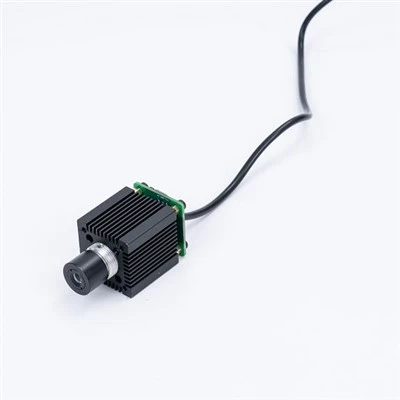
So to circle back to the original question: Can line laser modules produce straight lines on uneven surfaces? Yes, but with some caveats. Basic fixed line lasers work best on surfaces that are mostly flat; if the surface has minor texture, a mid-quality module with a good lens will keep the line crisp. For uneven surfaces, adjust the laser’s angle or position, use an adjustable line module, and keep an eye on the distance (closer is better for avoiding distortion). The line itself will always be straight in its own plane—what changes is how the surface interacts with that line.
Uniform Line Laser Modules If you’re working on a project with uneven surfaces and aren’t sure which line laser module is right for you, we can help you figure it out. Whether you’re a DIYer working on a home reno or a contractor needing industrial-grade equipment, we’ve got options that fit your needs. Reach out to our team to chat through your specific project, and we’ll point you to the right module and tips to make sure your lines stay straight, even when surfaces aren’t.
References
- Laser Principles and Applications, SPIE Press, 2020
- Line Laser Optics for Industrial Alignment, Journal of Precision Engineering and Manufacturing, 2019
- DIY Laser Tools Guide, Popular Mechanics, 2022
- Mounting and Alignment Techniques for Line Lasers, Occupational Safety and Health Administration (OSHA), 2021
Changshu Desheng Optics Electronics Co., Ltd.
As one of the most professional line laser modules manufacturers and suppliers in China, our products have good reputation in the market. Please feel free to buy advanced line laser modules for sale here from our factory. Good service and quality products are available.
Address: 8A, Yineng science and technology industrial park, No.183, Yinhe Road, Southeast Development Zone, Changshu, Jiangsu Province, China.
E-mail: desheng1@dershinelaser.com
WebSite: https://www.ds-lasers.com/
