When I first started working as a gear pump supplier over a decade ago, I remember a client calling in panic because their assembly line had ground to a halt—their gear pump was pushing too much fluid, flooding their workspace and ruining a batch of precision parts. That day, I realized flow control isn’t just a technical checkbox; it’s what keeps industrial operations running smoothly, whether you’re moving food-grade syrup in a bottling plant or viscous hydraulic fluid in construction machinery. Since then, I’ve walked countless clients through the ins and outs of gear pump flow control, and today I’m sharing what I’ve learned from both technical specs and real-world on-the-job experience. Gear Pump
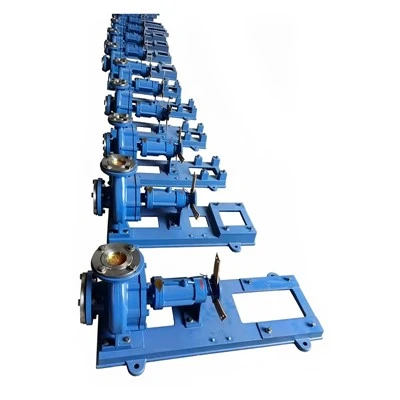
First, let’s cut through the common misconception: gear pumps are positive displacement devices, meaning they deliver a fixed volume of fluid per rotation. That’s great for consistent output, but it’s also why unregulated flow can lead to overpressure, energy waste, or equipment damage. Achieving reliable flow control with a gear pump doesn’t mean fighting its core design—it means working with it to adjust output to match your process needs.
The most straightforward method we’ve used with small to medium operations is changing the pump’s input speed. Think of it like a garden hose: turn the faucet (your motor speed) up, and more water comes out; turn it down, and you slow the flow. For gear pumps, this works because flow rate is directly proportional to rotational speed. Let’s do a quick math check to make that concrete: a typical external gear pump might move 10 gallons per minute (GPM) at 1,000 RPM. If you drop the speed to 500 RPM, you get roughly 5 GPM, no extra parts needed. That’s a huge win for smaller operations because it’s low-cost, easy to implement, and keeps the pump’s positive displacement integrity intact.
But here’s the catch: you need the right motor for this. A fixed-speed motor only gives you two options—on or off. To adjust speed, you’ll want a variable frequency drive (VFD) for electric motors, or a hydrostatic transmission for hydraulic drive setups. I recently worked with a craft brewery that was struggling with inconsistent wort transfer to their fermenters; adding a VFD to their 2-inch gear pump let them fine-tune flow to avoid splashing that could introduce bacteria. They saw a 15% reduction in product waste after the install, which is the kind of tangible win clients care about. The one caveat here is that VFDs work best for applications where you don’t need extremely high pressure consistently—for heavy-duty industrial uses, we pair speed adjustment with another method to round out control.
Another method we regularly recommend is using a pressure relief valve (PRV) as a bypass circuit. This is a go-to for operations that need to maintain a minimum pressure while adjusting flow. Here’s how it works: the gear pump pushes fluid through your process, and any excess flow that your system doesn’t need is routed back to the pump’s inlet (or a reservoir) via the PRV. You adjust the valve’s cracking pressure to control how much fluid bypasses, which effectively lowers the flow going to your application. Wait—if the pump is positive displacement, doesn’t all that excess fluid have to go somewhere? Exactly, so the PRV is your safety valve to prevent overpressure, which can rupture hoses or wear out pump gears prematurely.
A client in the agricultural equipment industry used this setup for their fertilizer blending system. They needed 2 GPM of concentrated fertilizer, but their gear pump naturally moves 8 GPM at full speed. By setting a PRV to open at 100 PSI, 6 GPM circulated back to the reservoir, leaving exactly 2 GPM for the blend. The key here is to size the PRV correctly—too small, and it can’t handle the excess flow, leading to overpressure; too large, and you’re wasting energy recirculating fluid. Our team always works with clients to calculate the maximum bypass flow before recommending a valve, which avoids the trial-and-error that leads to unnecessary downtime.
For applications where even small fluctuations in flow are a problem—like pharmaceutical manufacturing or precision chemical dispensing—we often turn to variable displacement gear pumps, though these are less common than their fixed-displacement counterparts. Unlike standard gear pumps, which have a fixed chamber volume between the gears and pump housing, variable displacement designs use a mechanism to adjust that chamber size. That means you can change the volume of fluid per rotation without touching the motor speed, which is perfect for high-precision processes. A lab equipment maker I supply uses variable displacement gear pumps for their reagent delivery systems; they need flow accuracy within ±1% to keep test results consistent, and these pumps deliver that even when running at low speeds. The tradeoff is cost—variable displacement pumps are more expensive than fixed models—but for industries where precision matters, it’s a worthwhile investment.
No matter which method you choose, there are a few common mistakes I see new clients make that kill flow control performance. First, ignoring fluid viscosity. Gear pumps are designed for a specific viscosity range, and if your fluid is too thick or too thin, your flow rates will be off. For example, a gear pump set up for motor oil will deliver far less flow with a thin solvent, because the fluid leaks back through the gear clearances faster. We always ask clients to share their fluid type before recommending a setup, because adjusting for viscosity (sometimes by changing pump clearances or material coatings) is a quick fix that makes all the difference.
Second, not accounting for pressure drop in the system. If your pipes are too small, or there are too many bends or filters before the application, the pressure at the pump outlet will be lower than expected, which will change flow rate even if the pump speed stays the same. I once had a food processing client whose gear pump was supposed to deliver 12 GPM to a filling machine, but was only pushing 8 GPM—turns out they’d installed a 1-inch hose instead of the 1.5-inch hose we recommended, creating a bottleneck. Fixing that hose size got their flow back on track without any other changes.
Third, skipping regular maintenance. Gear pumps rely on tight tolerances between the gears and housing, and worn gears or clogged inlet screens can throw off flow control over time. A manufacturing plant I work with had their production slow by 20% for six months because they never changed their pump’s inlet filter; once we cleaned the screen and replaced the slightly worn gears, flow rates went back to their original levels. Flow control isn’t a set-it-and-forget-it task—it needs regular checks to keep working as intended.
Now, let’s talk about when to use which method, because it’s not one-size-fits-all. If you’re a small shop with a basic application, speed adjustment with a VFD is the easiest and most cost-effective. If you’re running a high-pressure system where you can’t afford to waste energy, a bypass PRV circuit pairs well with fixed-speed pumps to keep flow consistent without cranking up the motor. If you’re in a precision industry, variable displacement gear pumps are worth the extra cost for that tight accuracy. And if you’re dealing with a very viscous fluid, like heavy oil or molasses, you’ll need to adjust for clearances as well as speed or bypass to get reliable flow.
As a gear pump supplier, I’ve seen firsthand that the best flow control solutions aren’t about the fanciest equipment—they’re about matching the method to your specific needs. There’s no universal setup, which is why I always encourage clients to share their process details instead of just asking for a “standard pump.” The panic call I got years ago? That client ended up switching to a VFD setup, and they still work with us today for replacement parts and advice. That’s the thing about this industry—you don’t just sell a pump; you solve a problem.
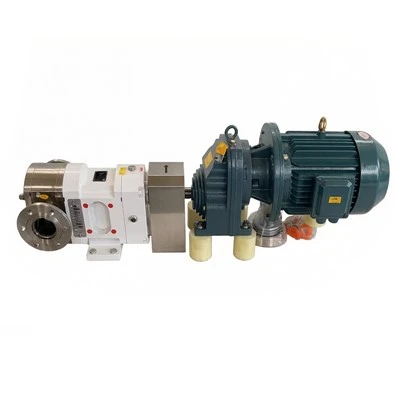
If you’re struggling with flow control for your gear pump setup, whether you’re dealing with inconsistent output, overpressure, or wasted energy, reach out to our team to discuss your application. We can help you walk through your options, calculate the right sizing, and find a solution that fits your budget and process needs. Let’s keep your operations running smoothly, no more halts or wasted batches.
Gear Pump References
- Gear Pump Application and Design, Hydraulic Institute, 2020
- Positive Displacement Pump Flow Control, Industrial Pump Association, 2021
- Variable Speed Pumping: A Guide to Successful Applications, US Department of Energy, 2019
- Fluid Viscosity Effects on Rotary Pump Performance, Journal of Fluid Engineering, 2022
Botou Hengyang Pump & Valve Co., Ltd.
With abundant experience, we are one of the most professional gear pump manufacturers and suppliers in China. Please feel free to buy high standard gear pump made in China here and get pricelist from our factory. All customized pumps are with high quality and competitive price.
Address: No. 159, Road 1, Development Zone, Botou City, Cangzhou, Hebei Province, China
E-mail: bthdbf@163.com
WebSite: https://www.hyoilp.com/
