If you’ve ever spent time around an industrial diesel generator set, you know that those rumbles and shakes aren’t just annoying—they can cause real problems, too. As a supplier of these units, I’ve seen firsthand how poor vibration control can damage the generator itself, wear out connected equipment faster, and even upset workers in the space around it. That’s why vibration isolation isn’t just a “nice to have”—it’s non-negotiable for keeping your genset running smoothly and your operation on track. Let me break down the most practical, science-backed measures I recommend to every client I work with. Industrial Diesel Generator Set
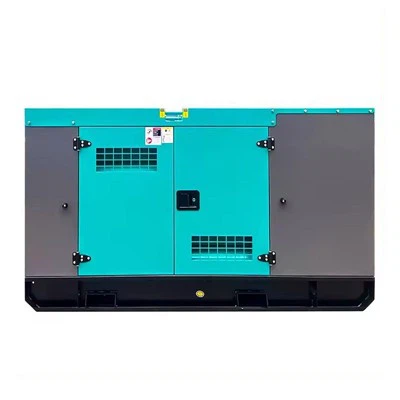
First, let’s get clear on where those vibrations come from. A diesel generator set has a lot of moving parts: the engine’s pistons firing up and down, the crankshaft spinning, the alternator’s rotor turning, and even the fuel pump and cooling fan adding small, consistent vibrations. These forces can range from low-frequency rumble (think the deep shake you feel across a floor) to higher-frequency buzz, and if you don’t isolate them, they’ll transfer directly to the foundation of your building or the equipment the genset’s connected to. Over time, that transfer leads to loose bolts, cracked piping, shortened component lifespans, and even structural damage to the space housing the genset. That’s why the first step in isolation is choosing the right base.
I always start with the generator’s mounting base. A lot of people go for a plain steel frame, but that’s a mistake if you want good isolation. The best base for most industrial gensets is a heavy-duty, welded steel unit with a damping core—usually made of rubber or a composite material sandwiched between steel plates. Why? Steel alone is rigid, so it acts like a bridge for vibrations to travel through. Adding the damping core absorbs those shock waves before they can move out of the base. I also make sure the base is sized correctly: it should be at least 10% larger than the genset itself to distribute weight evenly, which prevents tilting that can throw off engine alignment. One client of mine had a genset mounted on a too-small steel base, and after six months, the alternator’s bearings wore out 20% faster than expected—all because vibrations were bouncing around in the cramped base. Swapping to the damped fixed base fixed the issue entirely.
Next up: anti-vibration mounts, and this is where a lot of clients cut corners, so I drill into the details with every single one. Anti-vibration mounts (sometimes called “isolation pads”) are the small, rubber or elastomer blocks that sit between the genset’s engine/alternator and the base. They’re designed to flex just enough to absorb vibrations while still holding the unit securely in place. But not all mounts are created equal. You can’t grab a random rubber pad from a hardware store—industrial gensets have specific weight and vibration frequency requirements, so mounts need to be rated for the exact load of your unit. For example, a 500 kW genset needs mounts rated for around 1,200 lbs each, and a 1,000 kW unit will need mounts twice that heavy.
I also pay attention to the type of mount. There are two main types that work best for industrial gensets: shear mounts and compression mounts. Shear mounts are great for low-frequency vibrations, which are the most common with diesel engines. They flex side-to-side, absorbing the up-and-down rumble from piston movement. Compression mounts work better for higher-frequency buzz, like from the alternator’s rotor. A lot of clients mix and match—using shear mounts on the engine side and compression on the alternator side—to cover all bases. I’ve seen people use only one type, though, and end up with leftover vibrations that still transfer. One hospital client tried that a couple years ago, and their genset was so loud in the adjacent utility room that staff couldn’t have meetings there. Swapping the incorrect mounts for a mix fixed the noise and vibration in less than a week.
Wait, but what if your genset is sitting on a concrete slab instead of a steel base? A lot of industrial facilities use concrete foundations for larger units, so how do you isolate there? You still need mounts, but you’ll also add a layer of isolation between the mount and the slab. This is where spring isolators come in—they’re metal springs coated in rubber, placed under the anti-vibration mounts, that absorb even heavier vibrations than elastomer pads alone. Spring isolators are ideal for gensets over 750 kW, because they can handle the weight of big units and their deep, powerful shakes.
But here’s a trick I don’t always see mentioned: spring isolators come in different spring rates. You don’t want a spring that’s too stiff—it won’t flex enough to absorb vibrations. You also don’t want one that’s too soft, because that can make the genset rock back and forth when it starts up, which misaligns the engine. The sweet spot is to calculate the “natural frequency” of the genset-spring system. The natural frequency should be lower than the operating frequency of the engine—usually around 1-5 Hz for industrial diesels. That way, the springs don’t resonate with the engine’s vibrations, which would actually make the problem worse. I use a simple calculator I developed in-house for this, but I always tell clients to confirm with a structural engineer too—better safe than sorry.
Another measure that’s super important but easy to overlook: connecting pipe and wiring isolation. Even if you isolate the genset from the foundation, vibrations will travel through the pipes that carry fuel, coolant, and exhaust to and from the unit. If you use rigid metal pipes, they act like a wire for vibrations, carrying them right into the rest of your facility. So I always recommend using flexible connectors on all service lines. For coolant and fuel lines, that’s a reinforced rubber or metal hose with corrugated walls that can flex with the genset’s movement. For exhaust, it’s a heavy-duty flexible exhaust pipe, sometimes with a heat shield, to handle the high temperatures diesel exhaust puts out.
One of my mining clients had a big issue with exhaust vibrations a few years ago. Their genset was in a remote generator room, and the exhaust pipe ran 50 feet to the stack. Without a flexible connector, the vibrations were shaking the pipe loose at the stack end, which created a safety hazard. Adding a flexible exhaust connector not only fixed the vibration transfer but also cut down on exhaust noise by 15 dB—plus, the pipe hasn’t loosened in three years, which is a win. For electrical wiring, I use flexible conduit instead of rigid metal, because it’s less conductive to vibrations and can withstand the genset’s small movements. That might seem small, but it prevents wiring fatigue and loose connections, which are a common cause of genset breakdowns.
Then there’s the whole setup of the generator room itself. Even if you’ve isolated the unit, the room’s design can amplify vibrations. If the room has hard, parallel walls, the vibrations will bounce back and forth, making them stronger. I recommend adding sound-dampening panels to the walls and ceiling, but also using angled wall sections where possible, so vibrations don’t reflect. For the floor, if the genset is on a raised platform, making the platform with a damping material underneath (like foam or fiberglass) will add another layer of isolation. I also suggest leaving at least three feet of space around the genset for air flow—cramped spaces trap heat, which makes the engine run harder and create more vibrations, creating a vicious cycle.
Wait, let’s talk about maintenance, too, because even the best isolation measures won’t work if you skip upkeep. A lot of clients install their genset and forget about the mounts a year later, but over time, rubber mounts crack, springs rust, and flexible connectors wear out. I recommend checking all isolation components every six months, or after 1,000 hours of operation, whichever comes first. Look for cracks in the elastomer mounts, rust on springs, and tears in flexible pipes. If you spot any damage, replace the parts immediately—ignoring it will lead to more serious issues down the line. One manufacturing client had a cracked mount that they didn’t replace, and it caused the engine to misalign, which cost them $10,000 in repair parts and a day of downtime. That’s preventable with simple, regular checks.
I also test every genset’s vibration levels before it leaves my facility, and once it’s installed, I recommend testing again after 72 hours of operation to make sure everything is working right. A vibration meter can measure the amplitude of shakes in micrometers, and a healthy industrial genset should have a vibration level of less than 0.5 mm/s at the engine and 0.3 mm/s at the alternator. If it’s higher than that, you know there’s an issue—maybe a mount is installed wrong, or the spring rate is off. I work with clients to adjust the setup if needed, because even small tweaks can make a big difference.
Now, let’s clear up a common myth: some people think that more isolation is better, but that’s not true. Too much isolation can make the genset “float” too much, leading to excessive movement during start-up or when loads change. That movement can misalign the engine and alternator, which causes premature wear. It’s all about balance—calibrating the isolation system to absorb vibrations without letting the unit move so much that it damages itself. For example, a 200 kW genset might need four shear mounts and two compression mounts, paired with medium-rate springs, while a 1,500 kW unit will need six heavy-duty shear mounts and high-rate springs. Getting that balance right is what makes the difference between a genset that runs for 10 years without issues and one that needs repairs every other year.

As someone who’s been in the industrial genset business for over a decade, I can tell you that vibration isolation isn’t just a technical detail—it’s a key part of making sure your genset is reliable. I’ve seen clients save thousands in repairs, avoid costly downtime, and even create a more comfortable workspace for their teams just by getting the isolation right. If you’re in the market for an industrial diesel generator set, don’t cut corners on the vibration measures. And if you have questions about what’s right for your specific setup, feel free to reach out to connect on your procurement needs— I’m here to help you figure out the best way to keep your genset running smooth.
Household Diesel Generator References
- Diesel Engine Technology, 3rd Edition, Heywood, J.B. and Sher, E., McGraw-Hill, 2018
- Industrial Vibration Isolation Practice, Harris, C.M., John Wiley & Sons, 2020
- Generator Set Installation and Maintenance Manual, ISO 8528-5:2021, International Organization for Standardization
- Elastomer Mount Selection for Heavy Machinery, Society of Tribologists and Lubrication Engineers, 2019
Jiangsu Kaichen Electric Power Equipment Co., Ltd.
We are one of the most professional industrial diesel generator set manufacturers and suppliers in China, specialized in providing high quality diesel generators with reasonable price. We warmly welcome you to buy cheap industrial diesel generator set from our factory. Contact us for pricelist and quotation.
Address: Dinghuo Industrial Park, Jiangdu District, Yangzhou, Jiangsu Province
E-mail: 19962469616@163.com
WebSite: https://www.jskaichen-power.com/
